 CARMEN 💜Nov 18, 2025·edited
Animator Spotlight: Shinsaku Kozuma Pt. 1 (Beginnings to Leaving Anime)


- CARMEN 💜Nov 18, 2025·1 reply
All gifs in order:
Birth (1984)
Leda: The Fantastic Voyage of Yohko (1985)
Yu Yu Hakusho Episode 58 (1993)
Yu Yu Hakusho: The Movie - Poltergeist Report (1994) first cut by Kanji Nishida
Fatal Fury: The Motion Picture (1995)
Neon Genesis Evangelion (1996) first and last cut by Yoh Yoshinari - CARMEN 💜Nov 18, 2025·edited
Happy Belated Birthday to Shinsaku Kozuma Born November 13th, 1959. As the 70s gekiga era of anime in Japan came to a close, a window for emerging animation talent opened during the 80s. Yoshinori Kanada’s expressive and erratic animation was becoming the norm and the aptly titled ‘Kanada school’ of personnel started to be more visible. Urusei Yatsura was a pedal point for these new animators, and among them rose Masahito Yamashita and Shinsaku Kozuma. Unlike Yamashita (who took a more conventional Kanada approach), Kozuma would slowly begin to stand out for his wispy effects, shallow drawings, and very irregular timing. Less ornamental than Yamashita and Kanada himself, Kozuma stood out. From the mid 80s to late 90s, Kozuma was a rather unorthodox action animator, but was always in demand due to his high level skills. After abhorring anime work place conditions Kozuma joined Kanada at Square Enix where they lent their services as storyboard and cgi artists from the late 90s til Kanada’s untimely death in 2009. Since then Kozuma has returned to anime as a freelancer, recently claiming Studio Mappa as his main workplace since 2017 while occasionally venturing outside of the studio upon any connections requests. As a bastion of the original Kanada school of animators, Kozuma breaks the mold of conventional action animation, and his style surviving in an ever demanding climate of 21st century shounen action direction goes to show just how cherished and lauded he is.
- CARMEN 💜Nov 18, 2025
Initially never taking a keen interest in anime, Kozuma had his eyes on being a civil servant with much of any inhibitions of becoming an animator working out by happenstance.
“I like writing just as much as drawing, so I initially wanted to work in publishing – work under someone and develop like that. So, I got into animation by complete chance. When I moved to Tokyo, I was supposed to get a job as a civil servant, and I followed my older brother, who lived there already. When I went, I just happened to see a “people wanted” ad from an animation studio. That’s how it happened, by complete chance. (laughs)”
Kozuma shortly joined Doga-sha having his first in-between jobs, and six months after entering becoming a freelance animator. Kozuma’s earliest credited work was an in-betweening job on Galaxy Express 999 under Oh Production. Through this film he first encountered Masahito Yamashita, who then shortly introduced him to Yoshinori Kanada at a local bar.
- CARMEN 💜Nov 18, 2025
Kozuma and Yamashita immediately hit it off, shortly after founding their own sub contracting studio, Studio Oz. Connections were sprawling around this time, with Kozuma working at Kaname Pro and Ashi Productions, even claiming a desk at Kaname’s headquarters around 1982, despite not being a member. This studio consisted of animators like Shigenori Kageyama and Mutsumi Inomata, and a very young Hirotoshi Sano. Older staff included dozens of heavy hitters; Hideki Tamura, Kazuhiro Ochi, Takashi Sogabe, Atsuko Ishida, Tsukasa Dokite, Toshihiro Hirano, Ichirô Itano, and Kôji Itô all making their mark on Plawres Sanshiro, Urusei Yatsura, and Minky Momo, all airing concurrently and being directed by one Kunihiko Yamada (nowadays best known for Pokemon). For the sake of time I will cover them in order by appearance of Kozuma.
- CARMEN 💜Nov 18, 2025

Minky Momo is Kozuma’s first documented time key animating. Under the supervision of Tomatsu Tanaka and character designs by legendary Toei director Toyo Ashida it was an auspicious debut. Kozuma first appears on the intro to Episode 1 showing off cute 80s shoujo character acting. It’s not exactly breaking new ground, but his first glimpse of more realized character acting came on Episode 9 where his erratic timing started to come into playI guess people rather used stopwatches when writing storyboards to measure the length of shots or of the characters’ lines… At first, I was told to use one when animating, but I quickly stopped. It was too much of a bother! (laughs) Kanada didn’t use one, and neither did Yamashita… I don’t think anybody around me did, and there was no problem with it.
The first real indication of Kozuma’s style came on Episode 14, with a peculiar shot how he depicted fire, and would go to do with other effects in the future


Instead of flame colors such as orange and yellow interacting with one another, Kozuma instead divides the colors with black lines, something virtually no other Kanada animator was doing at the time. - CARMEN 💜Nov 18, 2025·1 reply
Moving on we get to Urusei Yatsura

It’s really an understatement to say how stacked and talented the earliest form of the series adaptation of this show was, even if it wasn’t in an era that wasn’t the most eye catching nowadays, what the animation crew was doing at the time was revolutionary. The two series heavy hitters early on were of course Kozuma and Yamashita, as the head action animators. While it’s unfortunate Kozuma’s tenure on the show was simply relegated to the tv show, and none of Oshii’s movies, unlike Yamashita, he certainly left an impact. Kozuma first appeared on Episode 60, where he was uncredited.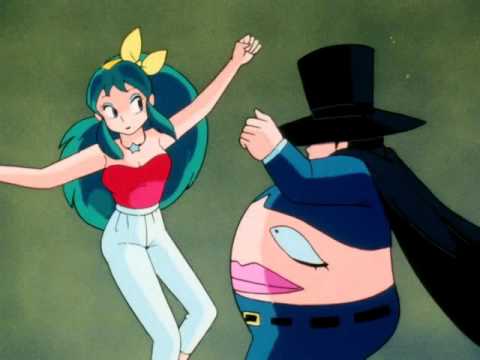
1:23-1:28 Kozuma
It’s unclear who did what in this joint dance scene but Kozuma forsure animated the shot of Lum flying in the air.Episode 50 was the big one for Kozuma, cementing him as a star within the Pro hemispheres. Another key animator participated in this section, but it’s unknown how much they covered. The comedic Kanada timing is still here, but Kozuma evolves his effects animation even further


During the tank portion, Kozuma draws the tank firing with no discernment between the cannon’s fireball and smoke, instead opting to draw the fire dissipating in little dots, making it more smokey despite the coloring indicating fire. He then at the very end draws an explosion with solid smoke marking more confusion into what’s going on
Future episodes would reinforce the fun timing, with 112 being the biggest indication of Kozuma landing on consistent effects animation, at least for this decade.
- CARMEN 💜Nov 18, 2025
The next show was Sanshiro which gave Kozuma more freedom, also marking his first mecha

Working again with the main Pro and Ashi staff it was a big chance to show off his skills. Unlike Urusei where Yamashita proved himself as an equal, Kozuma had to go up against his seniors with Kanada and Tamura placed on subsequent episodes.
Episode 1 has Kozuma on some pretty standard character acting, but he soon fulfills an entire mecha action sequence in the middle.


One thing Kozuma would favor throughout his entire career is razor thin speed lines, and diver like posing with remarkable perspective shifts. Episode 15 was another example of Kozuma messing around with timing, and also using lines to resemble smears instead of just speed lines - CARMEN 💜Nov 18, 2025
The big project and real showcase of the Kaname and Ashi teams was Yoshinori Kanada’s passion project, Birth

After Kanada had completed animation on Nausicaa with other Pro animators like Nabeshima and a young Hideaki Anno, it became time to work on Birth an OVA based on a one shot from Kanada. This was a project that encapsulated the whole breadth of Kaname Pro’s arsenal, to mixed results. While historically known to have a bit of a weak story (and in Kanada’s eyes seen as something he knew he could top) it’s best known for its animation and a key piece of history in the OVA market. With a score by Joe Hisaishi (courtesy of Victor Music), and high aspirations what could go wrong? Everything mostlyFor starters, the runtime had been stretched from 1 hour to 80 minutes, pushing the already limited story into more hollow action scenes. Plus there was an initial crediting issue with main animators being divided into key scenes while any other primary animators got assistant duties, and in-betweening was omitted entirely. Shinya Sadamitsu was in charge of direction and had a difficult task adapting less than what was available to him. The movie also struggled with comping, as the sheer number of drawings had several departments struggling.
Despite many of the stressors placed on the movie, the animation is pretty remarkable, as it resembled a playground for the animators in service of any substance. Kanada is of course the main heavy hitter, animating a 3 minute chase scene with some minor support, although its unknown who assisted, willing to bet Tamura and Yamashita . Tamura and Ochi’s own scenes seemed to be less reliant on following Kanada’s style as the kind of more sensitive shoujo approach came into play (see just how much Tamura’s softer style differs from Kozuma’s). Toshio Kawaguchi’s scenes were give a generous amount of polish thanks to mechanical supervision from Shohei Obara. With Nabeshima you can see hints of a realistic Nausicaa style while occasionally going off model. And for an underrated highlight Takayumi Hayashi does a stellar character acting sequence
Now for the heavy hitters. First Yamashita is nothing short of amazing on the movie, his sequences with the mechs pioneer early examples of Wakame Shadows a shading style depicting reflective surfaces with three tone shades. Basically treating shading as an effect. Lot of dynamic movement went into his scenes, getting heavy corrections from Kanada.
Then we get Kozuma, who was probably the highlight of the entire movie. His opening scene is incredibly well realized with fun squash and stretch movement, and bouncy jerky timing on one’s and twos. The character art in the sequence is simply lovely.


As for Kozuma’s effects, his smoke still disperses in little bits like he’d prefer, but for some shots the debris or rocks more closely resemble Kanada. This could have been a more conscious choice at recreating Kanada’s style, or corrections underneath him. Either way it is still a strong opener. The following scenes you see Kozuma under Kanada’s supervision, vs Tamura when he’s not corrected at all

- CARMEN 💜Nov 18, 2025
Kozuma appears again way later with a giant mecha sequence handling a bulk of it, notice how much more his explosion fx resemble Kanada.

lots of Kanada connections, but we see some uncorrected Kozuma HERE
He loves very unreadable derpy faces - CARMEN 💜Nov 18, 2025·edited
The Kaname/Kanada pipeline ostensibly broke down after Birth’s failure despite no ill will made between both parties. The best produced, and ’successful’ project
Genmu Senki Leda was one last stand for the talented troupe of animators and directors
Kaname’s team were pushing to actually show themselves more with this project. Inomata designs, Yamada direction, and the last final showcase with Kozuma and this crew. The most polished Kozuma’s animation will arguably ever look is showcased in this movie.First off Inomata’s designs are lovely, I think Kozuma had a lot fun drawing the dog


Takehiro Toyomasu’s robot designs are unique, and I don’t think most other mech designs from the 80s are touching this


- CARMEN 💜Nov 18, 2025
Kozuma then adds his touches here after Yohko’s transformation. I will say he does lend more stronger Kanada-isms then his own sensibilities, but his timing plays a role here
Razor thin smear/speed lines, and pleasing shapes
You can also see some Yamashita influence in regards to the shading
- CARMEN 💜Nov 18, 2025
It’s incredible work


original genga - CARMEN 💜Nov 18, 2025·edited
Leda was Kozuma’s last work for Kaname Pro. For the remainder of the 80s Kozuma embarked as a strong freelance artist often handling single scenes solo, and having a degree of clout to let his style shine through
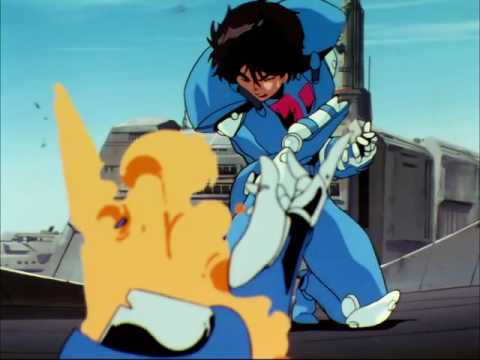
This fight scene from Borgman really showcases just how powerful Kozuma had become with mecha shading
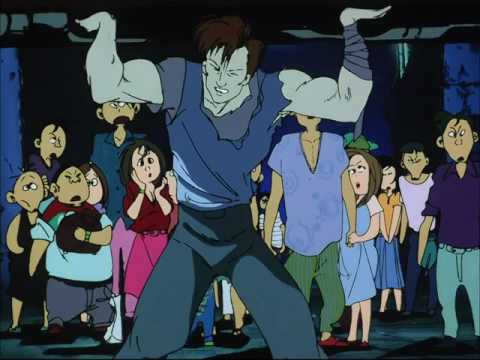
In the Borgman OVA pay attention to Kozuma’s very silly crowd characters. Definitely an archaic approach to crowds, but was still welcome in the era.
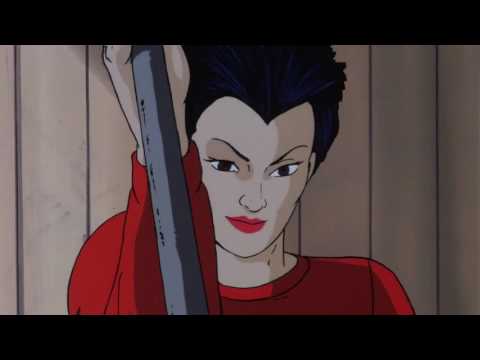
Lastly the Gi Joe Movie you can see Kozuma’s approach to physicality. His movement pre-dates Shinya Ohira and Shinji Hashimoto (who according to Kozuma was somewhat influenced by). Kozuma’s unstableness really comes from the posing, notice how he has characters really curl unto themselves.
- CARMEN 💜Nov 18, 2025
Now we enter the 90s. Kozuma had still maintained a reputable status, but in this era he’d display more of a knack for perfecting effects animation, and showing his prowess in an industry that was becoming more spread out. The first highlight of this decade is possibly the biggest scene of his entire career, on Yu Yu Hakusho Episode 58.

For some prior context, Kozuma’s involvement started due to the numerous Pierrot and Studio No.1 connections made around the time, so some bleed over from the Urusei Yatsura hay days including Masahito Yamashita were often included in episodes. The main component of 58 was director Akiyuki Shinbo, a future auteur power director at Shaft, but during this era an offbeat newcomer. - CARMEN 💜Nov 18, 2025·edited
From Kozuma’s Full Frontal Moe interview
We didn’t work together back then, but Akiyuki’s always been a kinda strange guy. When he came, he brought food with him – and I noticed he had brought a bentô… which he all ate by himself, in just four bites! In less than a minute! (laughs)
I thought he was a pretty fun guy, so I took a liking to him, and we started talking a lot. Then we’d help each other out – Yamashita was part of the group as well. As it went on, Akiyuki started coming to my place; then he started sleeping over. And before I knew it we were living together. (laughs)
The two had previously worked on Musashi Lord several years prior, in a situation where Kozuma was initially assigned to storyboarding, but then ended up on key animation. Episode 58 was the same situation, but in a much bigger scope. Taking place during the famous Dark Tournament Saga the entire arc spanned a virtuous period where the action animators of the show were allowed to get wild. Previous episodes had many animators slowly rising the ranks, notably Tetsuya Nishio and Masayuki Yoshihara showcased themselves as the young up and comers, but a key factor during this saga was Shinbo’s involvement. Shinbo had already been involved by the beginning of the series, notably doing some more absurd requests of the photography team like making backgrounds red or some surreal cuts like this one from Episode 21. Episode 30 was the first real instance of Shinbo getting wacky with every visual effect he could, employing the help of a man now legendary in Pierrot spaces Atsushi Wakabayshi
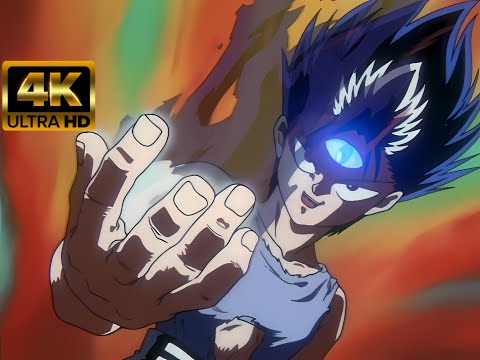
Storyboard Shinbo, AD Wakabayashi, full scene
There is an absurd amount of photography work going on in this scene, and the storyboards were a playground for both Wakabayashi and animator Kanji Nishida.
Episode 41 furthered more of Shinbo/Wakabayshi’s traits, and 47 has the craziest color script ideas from any of Shinbo’s episodes.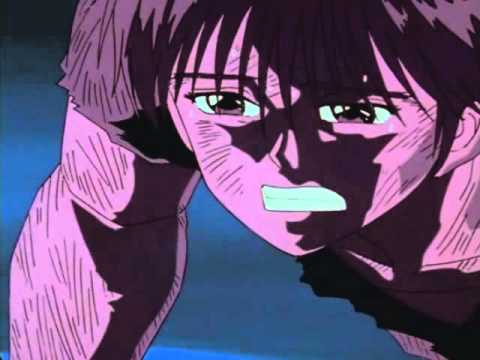


- CARMEN 💜Nov 18, 2025·edited
This duo was a full throttle force, with Episode 58 being there magnum opus, starting off strong with Hiei’s Dragon of Darkness.
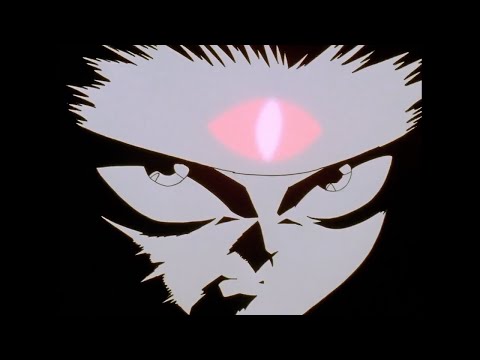
Kozuma 12:25-36, 12:47-50, 12:58-13:17, 14:46-48, 15:23-15:52, 16:25-17:07
“Wakabayashi seemed to like my art, so he didn’t correct me at all”
According to Kozuma, Shinbo initially requested him to cover over 100 cuts in the episode to which Kozuma stated “that’s impossible” in the final version covering about 20-30 with the Wakabayashi crew covering the rest. Legendary Pierrot animator Atsuko Inoue assisted with the bandage scene and you can tell between to the two due to drastic shifts in art style.
Kozuma


Inoue


From here you get a ghostly barrage of effects with Kozuma for the first time ever drawing a Kanada Dragon, a shaded dragon entirely enveloped by fire effects.


Unlike Kanada who took a rather ornamental approach to drawing the dragons, you see Kozuma go full wispy line work with long lines dictating motion rather than any advanced shading. A lot of Shinbo’s heavy lifting comes from some advance photography trickery, and strong storyboards. The rest of the fight is quite the spectacle with Wakabayashi taking the brunt of the animation. - CARMEN 💜Nov 18, 2025
Kozuma joined the main staff on the movies The Movie and Poltergeist Report


For the movie Kozuma’s inclusion was fairly minimal with him handling incidental fight scenes alongside Nishio, and a fight with the villain with some supposed help from an old friend Osamu Nabeshima. On Poltergeist Report, Kozuma had a bigger task, Kanada dragons again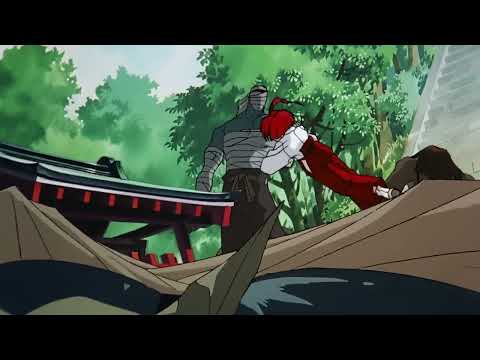
Kozuma 1:02:16-1:02:26, one cut at 1:02:31-1:02:36 Dragons only ALSO LISTEN TO HOW HORRIBLE THIS DUB IS
most of this scene is handled by Kanji Nishida as you can see the differences in art style. This was also the last time Kozuma and Kanada would be on an anime together, as Kanada was assigned the finishing fight at the end - CARMEN 💜Nov 18, 2025
Several highlights came for Kozuma, for the remainder of the 90s.
The Irresponsible Captain Tylor is a pretty iconic OP from this period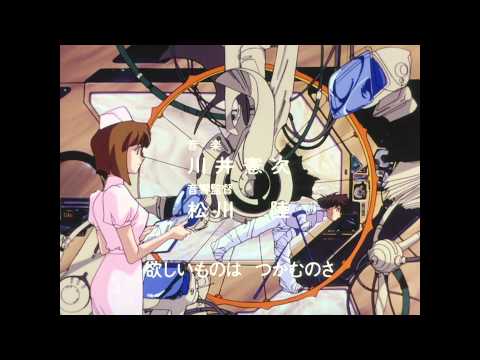
Kozuma 0:08-0:29
Very fun OP with some beautiful color design.
He also took on quite a bit of character acting for the show - CARMEN 💜Nov 18, 2025
Fatal Fury: The Motion Picture was a notable scene for Kozuma given his proclivity to keeping his own style.
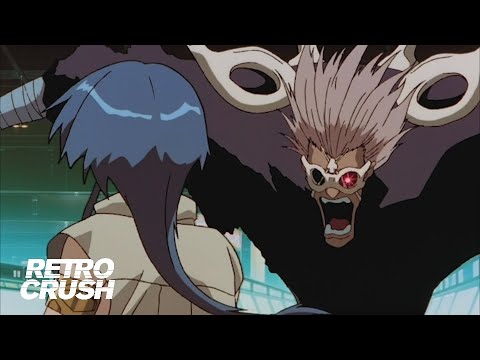
Kozuma 1:21-2:18 lovely background characters again
- CARMEN 💜Nov 18, 2025
Kozuma’s last true big scenes were on Neon Genesis Evangelion, both on the tv series and End of Evangelion

Kozuma, blood effects on Leliel, everything else non rounded is Yoh Yoshinari
In the film Kozuma gets perhaps his strongest character acting scene, co-animated with his now wife Noriko Morishima (the two supposedly met on Yu Yu Hakusho)
- CARMEN 💜Nov 18, 2025·edited
By the mid 90s, the anime industry had been thrown into a period of uncertainty, while it was gaining traction in the West soon leading to global popularity years later, most older remnants of the OVA and geika eras could either stay, and trudge on in 2D or move on to new things. For Kozuma, a fresh start was due.

From the Full Frontal Moe interview
And so, in the end, why did Kanada stop working with Miyazaki?
Shinsaku Kôzuma: “I guess things got too hard for him. The environment wasn’t really good, and he was a really kind person, so in the end, he just stayed so long because of money. The problem was that there was no other place in Japan besides Ghibli where the wage was that good. Kanada himself told me so. (bitter laugh) When we all went to work for Square in Hawaii, I actually contacted Yamashita first. At the time, he was working as mechanical animation director on Spriggan and he was reaching his limit as well. So I told him about this plan to make a film in Hawaii: I knew he was tired, so this was a sort of place he could run away to. That really made him lose it, and the very same day, he called Kanada and told him about it. The next day, Kanada was saying, “I’m coming too!” and I was like, “Who told you about this??” (laughs) But he had made up his mind anyway, and that’s how he quit Ghibli. That must have been around 1996 or 1997.”
So we come to Kozuma’s tenure at Square Enix, with Yamashita and Kanada. From 1998-2009 first starting on Final Fantasy VII

Were you interested in video games in the first place?
Shinsaku Kôzuma: Absolutely not. But, to put it plainly – I’m talking about the time of Final Fantasy VII – the pay was just so good. Something like ten times what you earned in anime. Square put a lot of money into FFVII. The budget was pretty high for the time. I worked on it as a freelancer, but when I saw how much they paid, it got me thinking. Just as I was thinking about all of that, they offered me to go to Honolulu. I wasn’t sure, because I didn’t really want to go there, so they asked me to introduce them to other animators instead. In the end, we were 7 or 8 people to go.
- CARMEN 💜Nov 18, 2025·edited·1 reply
This was a massive departure from Kozuma’s demanding hand drawn period, lending his storyboards alongside his companions the Japanese anime staff were given reigns into the CG world with full control. Kozuma’s involvement during his early time at the company was delegated to 2D animation assistance, but it’s unknown to what degree. Character designs were handled by Tetsuya Nomura, and I presume some of the blocky-chibi designs could have stemmed from the new 2D staff’s influence

During this period Kozuma noted Kanada had difficulty replicating his style into a 3DCG format
Japanese animation ultimately looks pretty flat, doesn’t it? Even when there’s perspective, the designs are generally pretty flat. But that doesn’t work out in CG, which is all about developing depth. So because of things like that, or the timing, it was pretty difficult for us to adapt at first. Kanada usually changed the timing to give his action more impact – sometimes it’d be on 4s, then on 6s… But in 3D, you can’t do that – or it would look weird. In real life, people never stop moving: they’re always breathing or something. Since we were trying to imitate that, we couldn’t stop the pictures either. We were pretty lost. And since our foundations were so different from those the 3D people worked from, we couldn’t really communicate with them either.
One big job for Enix was storyboarding the first half of The Spirits Within where he was involved with continuity design and storyboarding.

While definitely dated for its time, it was a big stepping stone for realistic 3DCG characters. Kozuma speaks about his involvementAt Square, you did storyboards for Final Fantasy: The Spirits Within. What parts did you storyboard?
Shinsaku Kôzuma: The beginning! We were 4 or 5 storyboarders in charge of given sequences. I was in group 3, and I did the first sequence, which was a bit less than 100 shots. What we did was the storyboard. It was pretty long, so we were three on it – Kanada, Yoshinobu Inano15 , and I, plus the 3DCG team, and we split the entire thing in 3. We were supposed to do something like layouts, but we had no Japanese-style ekonte, only an American-style storyboard. With those, you just have one drawing for multiple shots. But there were a lot of newbies in the staff, including in the 3D team, so they couldn’t work from that. So, I started drawing my own ekonte for the scene I was in charge of. I showed that to President Sakaguchi, asking him to let me do things my way since it was just my own sequence. But then he said, “Do the same for the entire film!” (laughs) That’s how a separate storyboard team was created.
From FFX to FFXII, Kozuma and Kanada both remained due to high pay. Kanada died in the summer of 2009, and according to Kozuma he recounted Kanada wanting to work on one last anime project before his untimely death at 57.
”it took place in Kyoto, and it was one of those stories about fighting demons. The main character was pretty wild, and he’d fight those demons everywhere. Kanada had a passion for shrines and temples, so he wanted it to happen in Kyoto’s temples.”
 FREE 💜Nov 18, 2025CARMEN
All gifs in order:
Birth (1984)
Leda: The Fantastic Voyage of Yohko (1985)
Yu Yu Hakusho Episode 58 (1993)
Yu Yu Hakusho: The Movie - Poltergeist Report (1994) first cut by Kanji Nishida
Fatal Fury: The Motion Picture (1995)
Neon Genesis Evangelion (1996) first and last cut by Yoh YoshinariPutting the first two on the watchlist
- FREE 💜Nov 18, 2025CARMEN
Moving on we get to Urusei Yatsura
!https://youtu.be/TB-fnaEb3RY
It’s really an understatement to say how stacked and talented the earliest form of the series adaptation of this show was, even if it wasn’t in an era that wasn’t the most eye catching nowadays, what the animation crew was doing at the time was revolutionary. The two series heavy hitters early on were of course Kozuma and Yamashita, as the head action animators. While it’s unfortunate Kozuma’s tenure on the show was simply relegated to the tv show, and none of Oshii’s movies, unlike Yamashita, he certainly left an impact. Kozuma first appeared on Episode 60, where he was uncredited.1:23-1:28 Kozuma
It’s unclear who did what in this joint dance scene but Kozuma forsure animated the shot of Lum flying in the air.Episode 50 was the big one for Kozuma, cementing him as a star within the Pro hemispheres. Another key animator participated in this section, but it’s unknown how much they covered. The comedic Kanada timing is still here, but Kozuma evolves his effects animation even further
During the tank portion, Kozuma draws the tank firing with no discernment between the cannon’s fireball and smoke, instead opting to draw the fire dissipating in little dots, making it more smokey despite the coloring indicating fire. He then at the very end draws an explosion with solid smoke marking more confusion into what’s going on
Future episodes would reinforce the fun timing, with 112 being the biggest indication of Kozuma landing on consistent effects animation, at least for this decade.I saw like a modern version of this I think the other day and it was way too gooner humor based
