 CARMEN 💜Feb 18
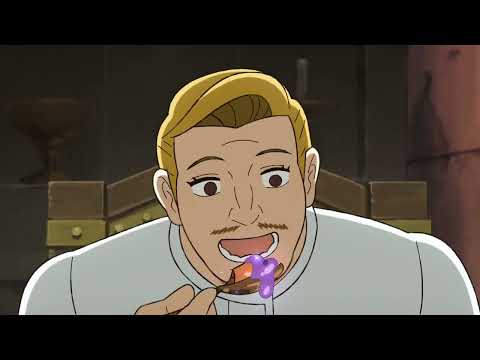
Then we get to Ranking of Kings where Nakamura makes his first acquaintance with Shota Goshozono aka Gosso the director of Episode 7.
full scene here
Once again Nakamura diving further into food sakuga, this scene gets by the pretty yet disgusting meal all while leading into a ridiculous punchline. The background morphing cut at the end is also a great touch.- CARMEN 💜Feb 18
Moving into 2022, Nakamura had his work cut out for him, working on two shows within the same season, him doubling up as an AD, and the two major episodes being released 4 days apart from each other. The first show was Bocchi The Rock the second Umehara helmed show at CloverWorks and directorial debut of Keiichiro Saito

This was a massive turning point for all parties involved. Nakamura’s close friend Nara had been promoted to an assistant director, while Kerorira came on as CD, CAD, and main animator. Umehara had plans to go all the way here, with animators like Akira Hamaguchi, Kerorira, Sakura Watabe, and Tenohira being on most episodes. Nakamura’s involvement goes one way, first animating on Episode 2 where Bocchi illustrates why Ryo is a loner - CARMEN 💜Feb 18·edited·1 reply
Then we get Episode 3, which is bar none one of the greatest moments of Nakamura’s career where he solo animates the A section of the episode for over 8 minutes. It takes an incredible amount of focus for an animator to work on a very long sequence, mind you have the scenes constantly trying to go overboard by one upping himself with gags. The episode is directed and storyboarded by Nara and his collaborative ability with Nakamura is phenomenal. The episode opens up with some goofy slice of life dialogue, with fun little details like Nakamura animating a washing machine, but the big surprise is Bocchi hyping herself up to experience some sense of fame and recognition she knows she can attain
Very energetic storyboarding and direction by Nara, and Nakamura goes the distance to show off Bocchi’s latent positivity. With her confidence someone up she tries to make small talk with two students about music but fails. Bocchi then daydreams about her fumbling a convo (done with hilarious stick figure animation) and a short dream sequence of being on television. Love how Nara contrasts the two scenes with blue waves.

We then are introduced to Kita the outgoing extrovert, but ultimately the one who needs to join the band. Kita’s overwhelming extroverted-ness is too overwhelming for Bocchi and again her crisis is illustrated through hilarious mix media like her identity being popped as a balloon with amazing background animation by Nakamura. - CARMEN 💜Feb 18·edited
After the ad break Bocchi tries to formally confront Kita, but fails and runs with a cut being a lovely ode to a scene from FLCL
Bocchi after the fact gets in her head and does a short sad song, with more hilarious use of mixed media background footage


Kita surprises Bocchi, and they slowly roll into conversation. We get so many big shock faces from Bocchi


some digital brush paintings by Nakamura

and the final shots with Bocchi and Kita are amazing

- CARMEN 💜Feb 18
Later on Bocchi and Kita walk towards the club, where its accidentally revealed that Kita is the ex guitarist from Kessoku Band. Unfortunately Ryo and Nijika show up out of nowhere, and once more we get some hilarious drawings from Nakamura.


This is where Nakamura’s section ends as the rest of the scenes at Starry are handled by other animators. Hamaguchi and Uchida are the main culprits in this section, with one Tomato doing a lengthy 2 minute scene. Nakamura eventually returns at the end of the episode co-animating with Hamaguchi though it is unknown where the cut delineation is. - CARMEN 💜Feb 18
We then get back to Mob Psycho 100. This time season 3 which was concurrently airing with Bocchi the Rock

Yet again Nakamura was able to keep a strong relationship with director Yuzuru Tachikawa, and his friendship with primary animator Naoto Uchida. This would be Nakamura’s busiest season yet doing some stellar scenes. We first have Nakamura animating a dream sequence of Mob pining over his crush, where she’s envisioned doing a long jump over high test scores. Nice use of brush strokes once againMoving on to Episode 2 we get Nakamura doing some morphing effects from a yokai demon. An extremely unusual shift for him, but the end product is quite astounding
Once again Nakamura’s milky smoke effects are a highlight and the very complex creature animation is stunning.
- CARMEN 💜Feb 18
On Episode 4, Uchida takes the reins of episode director and AD while Hayate Nakamura doubles as secondary AD. and I’m pretty sure Nakamura handles the first half. This episode starts the beginning of the end of the Psycho Helmet arc with characters discovering the true intentions of the Divine Tree. The opening moments of the episode comes with some crooked and unusual camera angles building a lot of tension.
Teruki is eventually made aware of the Psycho Helmet’s brainwashing first by revealing the candies with a quick scene by Saito then, in this very understated scene animated by Sato. We then get Teruki actively attacking the divine tree with some fantastic building animation by Nakamura, and wonderful low angle profile shots.
We then get the first confrontation with Psycho Helmet, and their hypnotic powers. Some very nice character acting by Nakamura with some eerie drawings to boot.

Teruki attempts to resist the being by fighting back, with some solid action cuts done by 3rd wave Neo Kanada legend Kosuke Kato, Itsuki Tsuchigami, and a wonderful Yutapon-esque bit by Yukina KosakaFrom this point onward Uchida handles the rest of the episode. Overall solid work by Nakamura ultimately outshined by his Bocchi episode.
- CARMEN 💜Feb 18
Nakamura’s output for the next few years, would be few and far between, however his next work would be significant coming onto the nightmarish destruction p*** hell-scape that is Jujutsu Kaisen’s Season 2 Episode 17. Directed by the master of scaled action Hakuyu Go this marked Nakamura and Hamaguchi’s first time participating with Go’s giant team, with over 60 key animators involved. Nakamura comes after a bit where Mahoraga blow up a pool, with a minimal explosion by Hayato Kurosaki, Daniel Kim animating Sukuna flying through the air, with Nakamura doing background animation of buildings, and debris with a reddish evil glow penetrating through the sky
Nakamura last cut only
- CARMEN 💜Feb 18
Moving into 2024, Nakamura lent his hand to Trapezium. A relatively unknown CloverWorks movie that got swept under the radar. Kerorira served as CAD, with Hamaguchi bringing Nakamura on. It is hard to guess where exactly Nakamura is in the film given the minimal amount of high tier cuts on the movie, this drawing cut however has some minor tells of his style though its more likely he’s within closer proximity to the small amount of Hamaguchi scenes.
- CARMEN 💜Feb 18·1 reply
2024 we also get to The Elusive Samurai. Nakamura only lent his pen to one episode with Yuusuke Kawakami asking for his assistance on a comedy cut
Nakamura’s tiny brush smears are always a highlight of his work
- CARMEN 💜Feb 18
2025 was a doozy with Nakamura working on some of the most complicated cuts of his career on Takopii’s Original Sin

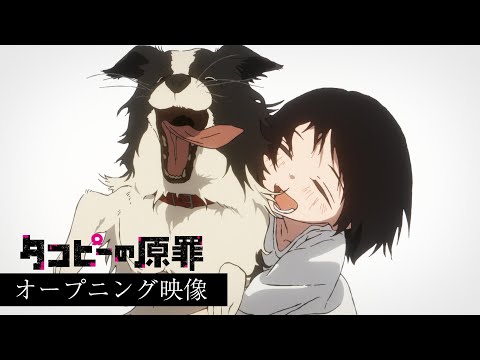
The first show entirely produced by Enishiya studio, and directed by seminal Dr. Stone madman Shinya Iino this was an out of nowhere explosion of talent with the best animators in Japan helming this show. Thanks to the efforts of Kotaro Sudo his manifestations of being the oddest producer in anime come in this extremely unconventional show. A 46 minute opening episode, with only 5 more episodes in a for all intensive purposes, ‘mini-series’ format. These episodes also had differing lengths, giving anyone who tuned in on a weekly basis no firm footing. Then there’s Enishiya, the brainchild of Shunsuke Hosoi and has left a subtle impact in the industry through music videos and commercials. It was not until their debut on Do It Yourself Episode 5 that the team realized they could be a venerable voice in the industry, with ex-Kyo-Ani alumni Keita Nagahara as an AD, and animator Toya Oshima (who’s pedigree has lead to dozens of connections) steering the ship. This series success through its dynamic drawings, backgrounds, and boards can all be attributed to a very eclectic team, that has manifested a careful synergy with each other. Shinya Iino series director, Nagahara on character designs, Ryu Nakayama student 10+10 as prop designer, Sakagi Itakura as art director, and Rie Matsumoto alumni Yuki Akimoto on color design. Then you get to directors with a healthy balance of relatively fresh faces to directing like animation forward creatives Eri Irei, Moaang, and Toya Oshima with a converse blend of story oriented vets like Masayuki Satoi and Hirotaka Mori. It is a wonderful union of minds with a near 2 year production schedule, keeping a high level of quality throughout.
- CARMEN 💜Feb 18
Nakamura was first involved in the premiere, with an incredibly somber storyboards by Iino contrasted by two differing perspectives in the show
Nakamura handles the scenes with Shizuka picturing herself walking in a small oceanic expanse clouded by her lack of personhood, and draining existence. He draws some ornate and undulating liquid effects done in a more expressionistic and non-pourous form that harkens to modern day 2D software based touches (Keiichiro Saito has a very similar approach to liquid or energy). Hiroaki Nakamichi then handles the cut of Takopii with lovely background animation and sparkly effects.
- CARMEN 💜Feb 18
Nakamura acts as primary AD and key animator for Episode 4 (4 is his lucky number), the debut of Toya Oshima as an episode director. Oshima and Nakamura previously crossed paths on Hakuyu Go’s big JJK episode from 2 years earlier, but it is very possible the two might have known each other mutually as early as Three Leaves, Three Colors. Oshima’s work as a storyboard artist previously had been fairly limited, but here he takes it to a new level with Nakamura acting as a conduit to convey his insane ideas. It’s legitimately impressive how Oshima is able to get a movie tier level production here. SPOILERS FOR TAKOPII One element of the episode that is built up is Naoki’s growing paranoia, and as his disillusionment grows the viewer gets more insights into his backstory. We get some nice opening animation with a disguised Takopii taking the mantle after Marina is killed, where to Naoki’s shock her death had been discovered.


- CARMEN 💜Feb 18
One thing about manga creator Taizan’s characters is lankiness, paired with big heads and marionette like proportions. Another aspect that is noticeable is hatching and grime genga lines which Nakamura gladly preserves. We get some great boarding from Oshima doing match cuts in different locations with Nakamura animating this section before the opener. Snapping back we then get a fantastic scene with police questioning the school children, all fantastically drawn in a hyper distorted board by Studio Trigger trump card Kai Ikarashi. Ikarashi much like Oshima has grown many similar obtuse layout techniques, but he just so happens to be on another level.


Even when looking at Ikarashi’s layout boards it is amazing how well he’s able to translate Oshima’s vision.
Lots of dramatic foreshortening shots, and the low angle hatching shot near the end of his scene is frightening.
- CARMEN 💜Feb 18
Nakamura then handles a slow moving scene afterwards. The extent of Nakamura’s AD is certainly in strong drawings, but he adds heavy noise lines to the character outlines that reflect Naoki’s state, and the feelings of others around him.


The scene continues with Shizuka slowly coercing him to do certain things, and is reflected in creepy morphing background cuts courtesy of Oshima’s storytelling abilities.We get board insanity later on with Naoki growing distrusting of more people including his brother.
- CARMEN 💜Feb 18
Once again more Nakamura/Oshima greatness. Naoki at one point drops his phone and his entire world nearly falls apart. Oshima executes a very slow frame rate, subtle background animation, and a baking the scene in a red light. Nakamura executes a few side character cuts, with strong contrasting boards and drawings


- CARMEN 💜Feb 18
We then get more nonsense from Nakamura, and Oshima doing a rather difficult POV shot with some match cut trickery. The cuts of Naoki doing his test were done by an non credited animator, it’s anyone’s guess as to who, but my personal leanings go to Ren Onodera as the background animation when Naoki looks up is absurdly perfect. The next scene is pure madness from Oshima/Nakamura. Naoki returns home to show his Mom his failing grade thinking it will gain some sympathy, but things don’t play out like he would expect. We are not getting only insanely detailed still frames, but differing animation techniques. The sinks in this scene even resemble wakame shadows to a certain degree.


- CARMEN 💜Feb 18·edited
Nakamura normally doesn’t animate very background heavy scenes, but the shot of Naoki’s mother walking towards him is effectively a moving layout. Everything in frame is hand drawn, and is a testament to his versatility as an artist especially with an incalculably complex board like this!

You can even see Oshima and him pay great attention to the shutter in the POV motion rather than having a floating autonomous camera as the focus. 10+10 assists in the following cuts with heightened glowing smoke around a stack of pancakes.

The feeling of gratitude is undone, when Naoki’s mother points out his own ineptitude as a student and a son, stating she won’t care and he can do whatever he wants.


The warped camera angles return, and the divide from his mother is highlighted in wonderful background shots that slowly distort with squiggly outlines. - CARMEN 💜Feb 18
Naoki’s life is completely shattered and with some shots Oshima still resorts to the pov putting the viewer in his shoes. Naoki goes back to see Shizuka where she gives him the proposition to turn himself in so she can shirk the blame for the murder. By this point the episode throws a bit of a curveball going backwards into Naoki’s background. As a child Naoki was always looking up to his brother Junya who was perfect, but Naoki could not get to the level his mother wanted him to. The early life of Naoki is wonderfully drawn by Rin Miura to Anpu where Nakamura’s touch is reflected better in this scene with softer drawings. Foreign freelancer Corcoran Mark Kenta then helps with the later flashback scenes and a more cartoonish cockiness is applied in the animation and boards.After this point it’s all Anpu drawing key scenes that have lead up to Episode 4 from Naoki’s perspective. We then get a quick montage bit, with Hiroki Arai and the only part animated by Oshima with escalating cuts, and pancakes that keep stacking. Ken Imazumi quietly bookends the scene with Naoki realizing what he might have to do. Imazumi takes over with a recap from the previous episode with Naoki’s lovestruck awe and reflection of his own actions.
- CARMEN 💜Feb 18
We then get more madness with Bocchi and Frieren’s very own Keiichiro Saito doing mesmerizing pov shots, being the absolute apex of Oshima’s use of camera angles.
Nakamura of course touches up the entire scene, which ends on these blinking cuts of the objects that can change Naoki’s trajectory in life. Saito briefly assists with Shizuka giving Naoki a small kiss relieving him that she will come back for him even if he goes to jail.


I love how Nakamura emboldens Naoki’s indecision with thick outlines. - CARMEN 💜Feb 18
Later on, Eri Taguchi gives a brief establishing scene with the older brother Junya. A nightmarish scene manifested out of Naoki’s mind ensues, all animated in a macabre fashion by Spy Family regular Keisuke Okura (of all people).


Oshima is bursting with creativity here; from the giant hands to the globular figure in Naoki’s eyes, it goes to show just how intimidated he is by his older brother. - CARMEN 💜Feb 18·edited
All of this is a fabrication by Naoki as his brother assures him he can tell him anything. Naoki then pours his heart out about his inadequacy as a person, claiming he has no one but Kuze. For the first half of this confession Shuu Sugita gets the seldom opportunity to handle standard character acting which feels surprisingly reminiscent of Mitsuo Iso.
The way the hair and shoulders really pop and move through his cuts all feel out of the full-limited playbook. Sugita then throws all those notions out the window animating a starry laden cut of brotherly love through Junya’s pov. metaphorical shooting stars are a common trait of Oshima’s animation


Sugita is able to get some very strong and palpable emotions of the Junya shaking Naoki out of it where the once purple and frightening figure in his eyes now resembles a new glimmer of light peering through the darkness of his life. Nakamura then handles the rest of their scene with Junya cutting Naoki some slack about the pancakes. Then Nakamura ends the scene with the two brothers reunited on good terms.Offscreen, it is revealed Naoki revealed himself to the police, but due to rumors spreading Shizuka is immediately suspected of putting him up to it. The final scene is done by a close NC (probably Hamaguchi or a close friend) where Shizuka in her stupor from feeling betrayed turns her feelings around in a last ditch effort to feel any sense of happiness by returning to her father.
By the end of the episodes run Nakamura had animated nearly half the episode (117 cuts I think?), while also correcting the entire thing. It is a serious career highlight and testament to his unbelievable work as an animator when paired with the right creative like Oshima. The possibilities are endless
- CARMEN 💜Feb 18
Well that’s Hayate Nakamura. Probably one of the most underrated and least talked about from the A-1/CloverWorks bred of freelancers. While he may not have the incredibly idiosyncratic approach of his mentors like Hamaguchi, he gets by sheer versatility and sleeper hit talent. From his early days
as a character animator to a growing in the artist in a rapidly expanding industry Nakamura is someone who should be remembered as an ole reliable in the animator’s world of anime.