 Dec 2, 2020
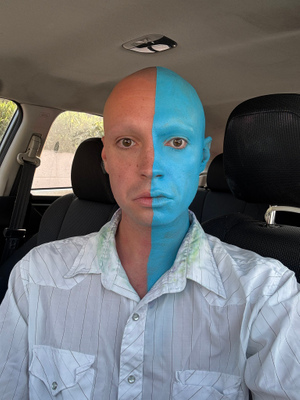 Blue Guy
Look at Tony Soprano over here lmao
 Dec 2, 2020
 fmvp yzy vert
What are you implying?
You were duped!
 bigmancam 🏕️Dec 2, 2020·1 replyfmvp yzy vert
It’s what it said on the packaging 🤷♂️
Said it was half sundried or something too
 british food terms are so weird
 - Dec 2, 2020·1 reply
Free range chicken my ass
 Dec 2, 2020·edited·3 replies
 Unity 💯Dec 2, 2020
McRib is back bros
National holiday! Enjoy!
- bigmancam 🏕️Dec 2, 2020The Man
Free range chicken my ass
do WHAT to your ass?
 Dec 2, 2020https://twitter.com/theathletic/status/1334151891153022979https://twitter.com/theathletic/status/1334142779853852674Deelights_· edited
Lmfaooooo
- Dec 2, 2020·1 replyhttps://twitter.com/theathletic/status/1334151891153022979https://twitter.com/theathletic/status/1334142779853852674Deelights_· edited
Can anyone who got a subscription screenshot the article pls
- Dec 2, 2020·1 replybigmancam british food terms are so weird
What do you call it 🤨
- Unity 💯Dec 2, 2020
Gonzaga vs WVU and Illinois vs Baylor tonight got me on brick
 Chief Julio 🇪🇸Dec 2, 2020·1 replyDeelights_
Can anyone who got a subscription screenshot the article pls
Sure hold on
- Dec 2, 2020
NBA players feel this towards George Paul too? Crazy
- Dec 2, 2020Chief Julio
Sure hold on
 good looks vro
 - bigmancam 🏕️Dec 2, 2020fmvp yzy vert
What do you call it 🤨
not sun soaked
- bigmancam 🏕️Dec 2, 2020·1 reply
@lil_YZY_vert i mean you gotta admit, yall got some funny names for thingS!
 Dec 2, 2020
kawhi 😭😭😭
- Dec 2, 2020
- Chief Julio 🇪🇸Dec 2, 2020·2 replies
Nah this a long ass article b, I’ll just copy and paste this s*** when I get on my MacBook

- Dec 2, 2020Chief Julio
Nah this a long ass article b, I’ll just copy and paste this s*** when I get on my MacBook
That works too
- Dec 2, 2020·1 replybigmancam
@lil_YZY_vert i mean you gotta admit, yall got some funny names for thingS!
Gonna need some examples
- Dec 2, 2020Chief Julio
Nah this a long ass article b, I’ll just copy and paste this s*** when I get on my MacBook
Take your time king
- Chief Julio 🇪🇸Dec 2, 2020
Before every Clippers game last season, the team’s training staff would honor Kawhi Leonard’s request and create a private space for his pregame routine.
The staffers would enter and take over that space for roughly 20 to 45 minutes, according to multiple team and league sources. On the road, there were occasions when the space they occupied was the female staffers’ locker room. That also happened sometimes before a doubleheader at Staples Center when the changing of the court limited the availability of the Los Angeles Kings’ locker room, where Leonard normally warmed up privately.
Various Clippers players, coaches and staffers were aware of the arrangement and some felt uneasy about it. While there appeared to be no sexist intent, the visual of women staffers being unable to use their locker room to use the bathroom, to change clothes or to access their personal belongings while Leonard stretched did not go unnoticed. At least one player mentioned it to a confidant and at least one staffer complained about it to coworkers. It was an awkward arrangement, but drawing too much attention to it risked being seen as going against Leonard, the team’s unquestioned star, in the eyes of the organization.
“What were they going to do about it?” one league source said. “It’s Kawhi.”
When reached for comment by The Athletic, the Clippers denied that staffers had ever been dismissed out of a locker room space for Leonard and the training staff, adding that his stretching was scheduled on the team’s pregame itinerary and that spaces, particularly on the road, were limited and would sometimes serve multiple functions.
If there was one dynamic that showed the issues with some of the preferential treatment the Clippers conceded to Leonard and Paul George last season, and how it affected both other players and staffers, it was Leonard’s pregame privacy request. And while the locker room space situation didn’t happen in the NBA’s restart in the Orlando bubble, the chemistry issues created earlier in the season contributed to the team’s shocking loss in the Western Conference semifinals. Up 3-1, LA dropped games 5, 6 and 7 after having led the Denver Nuggets in each of them at halftime.
On and off the court, the players never established the requisite chemistry, continuity or trust to win a championship in their first year together. The organization estimated it could layer superstars on top of the core group of returning role players to win a title, but it awfully misjudged the internal blowback over everything from playing time to preferential treatment to personality differences.
“How do you ever build a strong team with that s*** going on?” one team source said. “I thought from the beginning, ‘We’re doomed. Kawhi wants too much special treatment.’”
NBA players understand that the league is a star-driven operation, and it doesn’t start or stop with Leonard and George. Every All-Star receives some form of preferential treatment, and the Clippers were no different, especially in light of the uncertainty regarding their stars’ contract status — both players can enter free agency again in 2021.
But according to multiple league sources, the perks the Clippers gave Leonard and George began to compromise the standard of the culture they had built over the 2017-18 and 2018-19 seasons — the very culture that the Clippers used, in part, to attract Leonard and George to Los Angeles.Some of those perks included:
• Leonard and George were the only players to have their own personal security guards and trainers.
• Leonard and George had power over the team’s practice and travel schedule, leading teammates to believe Leonard canceled multiple practices.
• Leonard was allowed to live in San Diego and commute from there, which often made him late for team flights.
• Leonard and George typically didn’t speak to the media until at least 45 minutes after games concluded, under the guise of postgame treatment or workouts. This usually resulted in their teammates speaking with the media first, and for longer, essentially becoming the public voices of the team.
• Teammates also believed that Leonard and George were able to pick and choose when they played. Not only did they sit out games entirely, but also at times they accepted or declined playing time in the moment.
While star treatment can work in a locker room, and some of these practices aren’t necessarily unique to the Clippers, it resulted in a lack of buy-in from this particular group, league sources said.
The hard-nosed, competitive culture the team had built from 2017 to ’19, predicated on their all-for-one ethos, was undone in a matter of months, and now a challenging new season beckons, with camps opening this week and games tipping off three days before Christmas.
Following the playoff elimination by the Nuggets, which ruined a much-anticipated Lakers-Clippers conference finals, reserve guard Lou Williams, who was often the public conscience of the team to the media, offered insight into why LA flamed out.
“I think a lot of the issues that we ran into, talent bailed us out,” Williams said. “Chemistry, it didn’t. In this series, it failed us.”
Williams uttered the word “chemistry” three times postgame. Then-coach Doc Rivers cited “trust” three times. George also mentioned “chemistry,” adding that the Clippers dealt with “adversity” and “didn’t get much time to be together.”
The team’s coded language all pointed back to the same issue: The Clippers were rarely on the same page during the 2019-20 season.
Even in the aftermath of their ouster, the Clippers couldn’t agree on the context of their failed season together. George surprisingly downplayed the team’s internal ambition despite the potential two-year window he and Leonard could be in L.A.
“I think, internally, we’ve always felt, this is not a championship-or-bust year for us,” George said.
Meanwhile, Williams shared the opposing viewpoint, one that most of the Clippers felt internally: This past season was title-or-bust.
“We did have championship expectations,” Williams said. “We had the talent to do it. I don’t think we had the chemistry to do it — and it showed.”
The Clippers’ postgame comments were a microcosm of the internal disconnect that affected the team all season.
The calamitous ending was the tipping point for Rivers, along with his lack of postseason adjustments and several philosophical differences about the team’s future, which led the franchise to mutually part ways with him.
Following a two-week coaching search, the Clippers hired Tyronn Lue, an assistant on Rivers’ coaching staff, to replace his mentor on Oct. 20.
Lue enters one of the more intriguing and high-pressure situations in the league. He has a Leonard- and George-led group that will compete for a championship immediately, but there will be several lingering challenges — including implementing greater accountability in the locker room — that he and the organization need to resolve ahead of the next playoff run.Looming over the entire situation is Leonard’s and George’s 2021 free agency.
Back in January, The Athletic chronicled the Clippers’ inner strife, including the awkward adjustment period incorporating Leonard and George and the locker room’s resentment toward their preferential treatment. The quiet personalities never fully clicked, leading to a divide between the taciturn stars and seemingly marginalized role players, league sources said.
When adversity eventually hit in the playoffs, the Clippers unraveled under the pressure.
“They didn’t have good chemistry,” one league source said. “How could they?”
Immediately, Lue and his coaching staff are facing a similar challenge to the one he overcame during his first season in Cleveland: holding his superstars accountable and settling the group of complex personalities.
One of the central issues last season was that the Clippers essentially built the core of their roster from the outside in, rather than the inside out.
The dynamic primarily affected the most prominent players from the previous season, namely Williams, Patrick Beverley and Montrezl Harrell, multiple league sources said. Those three had enjoyed greater adulation and responsibility in the prior season and didn’t always agree with the perceived internal hierarchy.
Most championship teams have a foundational star in place for several seasons before their first title. But the 2019-20 Clippers didn’t have that piece. They attempted to defy experience and continuity through Leonard’s and George’s incredible talent and the base of the prior season’s exceptional chemistry.
- Chief Julio 🇪🇸Dec 2, 2020
It’s possible to win in Year 1 — the 2019-20 Lakers won the title with LeBron James and Anthony Davis in their first season together — but it’s historically uncommon. Unlike James, Leonard and George aren’t vocal leaders; they’re lead-by-example types.
The Clippers’ previous leadership regime — Beverley and Williams — was more vocal in nature. Beverley is a direct, if not confrontational leader, while Williams is a calming presence who picks his spots. But after being displaced within the team’s hierarchy, they weren’t as comfortable as the season before, multiple league sources said.
“Who did they look to as the guy that was going to bring them all together?” one league source said. “It can’t be the coach all the time.”
Leonard’s reticence was a tone-setter in the Clippers’ locker room.
The 2018-19 Clippers had a fun, light energy about them. The group visibly enjoyed being around one another, in part because they were a ragtag group with middling expectations.
Conversely, the 2019-20 Clippers had a much different vibe. Those around the team often categorized it as “off” or “weird.” The players didn’t joke around as much before or after games. They were far more serious — and quiet. Players, coaches and staffers became less friendly with and available to the media.
For better or worse, Leonard’s personality is enveloping, particularly as he’s grown into a superstar who doesn’t embrace the spotlight.
It presented a juggling act for Rivers, who was essentially in a lose-lose situation when it came to balancing the locker room’s personalities, egos and sensitivities. It was impossible to keep everyone content and connected.
“Pat, in particular, took the brunt of not feeling special,” one team source said.
Teammates had a level of acceptance of Leonard’s preferential treatment, as his status as a two-time champion and two-time Finals MVP — the then-reigning Finals MVP, at that — was indisputable.
But George’s treatment was more of an issue within the locker room, league sources said. George, while a perennial All-Star and All-NBA candidate, didn’t carry the same cachet with his teammates. There was a sentiment among certain teammates of, “What have you accomplished in the playoffs?” multiple league sources said.
The special treatment might have gone over better in the locker room had Leonard’s and George’s teammates felt they had a stronger relationship or bond with their superstar colleagues. Several members of the locker room felt that injuries should have allowed Leonard and George ample time to establish a better rapport with their teammates, but that never happened.
According to league sources, Leonard oftentimes was hanging out with close friend and Clippers assistant coach Jeremy Castleberry, whom Leonard has known since high school. George stuck with Reggie Jackson, one of his best friends in the league, and former Oklahoma City teammate Patrick Patterson.
The Clippers’ lack of personal connections led to communication issues in crucial moments, including, most notably, during their collapse against the Nuggets.
The players didn’t always address on-court issues or miscommunication or hold one another accountable. More often than not, the Clippers tried to sweep their issues — offensive stagnation, defensive miscommunication, inconsistent rebounding, etc. — under the rug rather than address them, league sources said.
When there was conflict, the group would typically go silent, the players retreating into their own worlds, on their phones or at their lockers. There was a discernible distance between the team, multiple league sources said.
“There was no dialogue when things weren’t good,” one league source said. “You need more than the rah-rah from Pat Beverley, every once in a while, that amps everybody up.”
Recognizing this, some players and coaches tried to improve the situation. After a rough stretch in early January, including Harrell’s eyebrow-raising comments to the media about the state of the team’s locker room, Leonard organized a series of players-only film sessions. He also worked out with Beverley and George during the hiatus after the league shut down because of the coronavirus.
But there wasn’t consistency behind his actions with teammates, multiple league sources said. He didn’t talk up his teammates publicly the way other stars do, or even behind the scenes. Leonard’s leadership progressed throughout the season, but it never reached the level it needed to foster a championship culture.
Rivers would frequently step in, at practices and in the locker room during games, initiating difficult conversations from which the group often refrained. But his voice stopped carrying the same weight, eventually. Overall, he wasn’t able to fully hold his players or coaching staff accountable, multiple league sources said.
Marcus Morris Sr., whom the Clippers acquired at the February 2020 trade deadline, entered the locker room with the intent of asserting himself as a leader after pacing the New York Knicks in scoring. He quickly became one of the team’s louder voices.
While league sources say Morris had good intentions with teammates, and was trying to step into the clear leadership void that he had observed when he joined the team, Morris’ advice for his new teammates didn’t always go over well.
“You don’t want to be the guy that just shows up and starts telling people what to do,” one league source said.
According to league sources, center Ivica Zubac and Morris had several heated arguments early in Morris’ tenure, with Zubac essentially saying, “Why are you telling me to change what I’m doing after I’ve been doing it successfully all season?”
The ongoing adjustment and power dynamic between the stars and the role players prevented other Clippers from stepping up, creating a vacuum that was never filled — one that played a part in the team’s eventual collapse.
“If you were to ask all 15 players individually who the leader was, you’d get a lot of different answers,” one league source said.
The Clippers’ issue was often not what was said, but rather what wasn’t. That dynamic, coupled with the team’s injuries and lack of practice time due to the schedule and Rivers’ coaching style, led to a lack of continuity ahead of the NBA’s bubble restart in Orlando in July.
- bigmancam 🏕️Dec 2, 2020·2 repliesfmvp yzy vert
Gonna need some examples
spotted d***
rumbledethumps
various puddings (not puddings at all)
bangers n mash
