 CARMEN 💜Oct 29, 2023
Animator Spotlight: Yasushi Muraki Pt. 1


- CARMEN 💜Oct 29, 2023
All gifs in order
Tekkaman Blade (1992)
Mobile Police Patlabor 2 (1993)
Macross Plus (1994)
Ghost in the Shell (1995)
Neon Genesis Evangelion Episode 8 (1995)
Memories (Stink Bomb) (1995) Presumed
Neon Genesis Evangelion Episode 19 (1996)
X: The Movie (1996)
The End of Evangelion (1997)
Vampire Hunter D: Bloodlust (2000) Presumed
Metropolis (2001)
Cowboy Bebop: The Movie (2001)
Steamboy (2004) - CARMEN 💜Oct 29, 2023·edited
Happy Birthday to Yasushi Muraki From mechas to explosions, to mecha with explosions Muraki is the one for the job. Coming up in the late 80s mecha era of Masami Obari and taking distinct influence from him, Masahito Yamashita, and Ichiro Itano , Muraki quickly became one of the most prolific newcomers of that era. His sensibilities became rewritten when asked on to Patlabor 2, being accompanied by senior mech animator Hiroyuki Okiura where he learned how to apply shrewd realism to his drawings and better modernize his effects. Past the 90s Muraki has completely mastered the Itano Circus one of the few animators to do so, and also draw it consistently on 1s. He fills a certain niche fulfilling that role but just like his friends, whether it’s Takashi Hashimoto, Soichiro Matsuda, Hideki Kakita, Shuichi Kaneko, or Hirofumi Masuda he is incredibly adept at drawing realistic destruction, whether it’s nuclear blasts, city wide building collapsing, and various other forms of evisceration. Through Macross, Evangelion, Eureka Seven, and so on, Muraki has proved himself to be one of the greatest living mecha animators to make it out of the 90s and is one of Ichiro Itano’s greatest disciples.
- CARMEN 💜Oct 29, 2023
The first years of Muraki’s career came about during the late 80s, first starting on in-between animation with Great Planet Evil Destroyer Dangaioh, a place where he could watch his idols like Yamashita and Obari cook up some of the best and forward thinking mecha animation of that era. The dangerously complex designs of the time were a courtesy of Shouji Kawamori and Obari himself. This series definitely helped Muraki get use to drawing heavily detailed designs early on. Shortly after other more art-style oriented shows like Demon City Shinjuku, Muraki got his first KA job and mechanical animation direction gig on AD Police Files. He’d get his first chunk of action KA on Detonator Orgun. Not insane debut, but definitely a start.
- CARMEN 💜Oct 29, 2023
On Tekkaman Blade Muraki would make his first big appearance animating alongside Obari, and Ranma animator Atsuko Ishida. Making stunning mecha designs by Rei Nakahara and future Rahxephon designer Yoshinori Sayama move with precision.
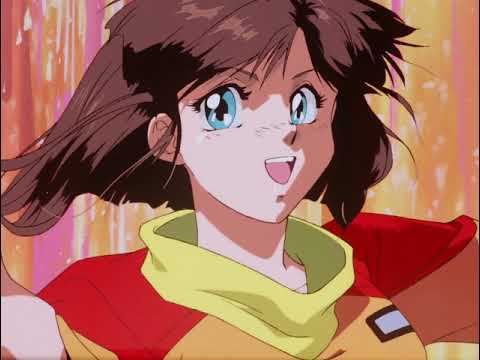
Muraki 1:25-1:33, Obari does the brief fight scene before him
- CARMEN 💜Oct 29, 2023
Muraki’s entire world, and understanding of animation would be flipped around the next year on Mobile Police Patlabor 2

Helmed by a newly oiled machine Production IG, the film’s entire direction at the behest of Mamoru Oshii and animation direction by Kazuchika Kise made for one of the most grounded approaches to realism in anime up until that point. No one on the staff felt held back, and for the first time Muraki could let loose. His first scene involved Japanese units unable to fire on hostile attackers due to clauses in UN Peace missions, as result they get killed.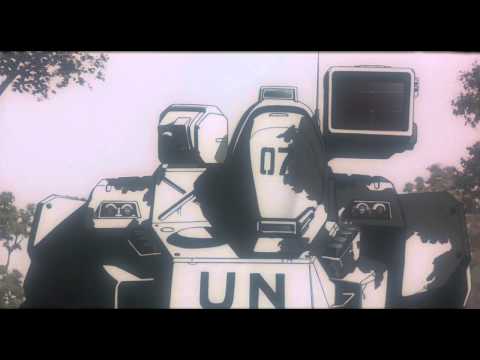
Muraki 1:54-2:48
A 2 minute scene, with ambitious CGI HUD displays for the time. Muraki animates what he excels at, missiles! The way he animates them has less thicker smoke instead looking like cigarette smoke rather than flaming missiles. The subsequent explosions are heavily informed by Takashi Nakamura-esque smoke effects, as well as Okiura’s. - CARMEN 💜Oct 29, 2023
Speaking of Okiura, the two team up on a scene later in the film with the Gunship attacks
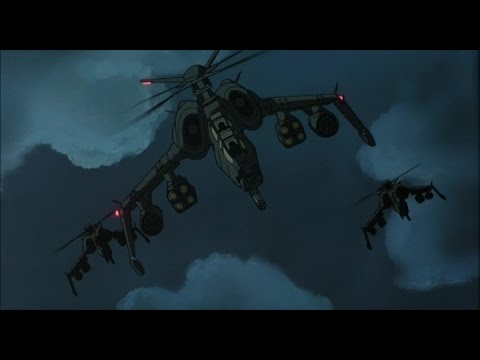
Muraki start-0:51, rest should be Okiura aside from one explosion
Huge inspiration had been taken by Muraki for exceedingly insane effects work from Akira opting for smoke that had these shaded curling shapes within them. Okiura had taken a different direction by the this point, opting for more of Mitsuo Iso’s take on effects and making the smoke plume laterally, with more variations in layers as well. - CARMEN 💜Oct 29, 2023
After Muraki had done various work on The Hakkenden, Jojo’s Bizarre Adventure, and Super Dimension Century Orguss 02, he was recruited on to Shoji Kawamori and Shinichiro Watanabe’s continuation of the Macross series with Macross Plus

A beautiful looking show, and another series at the time making ambitious use of cgi in certain portions. With top KAs like Koji Morimoto, Kouichi Arai, and Ichiro Itano in the credits Muraki really had no choice but to show out on the two scenes he’s credited for. His brief appearance in Episode 1 is fine, doing a manageable Itano Circus, but his cuts on Episode 4 is where he blooms like a flower. Muraki puts his entire soul into this sequence, and inputs such a high caliber of technical ability and craving to get as many cool missile cuts as possible. The entire climatic sequence would not be possible without the supervision of Masami Goto, another astoundingly impressive mecha animator who helped guide the movements of the variable fighters, with his use of distance between target camera trickery, and high value corrections. Muraki’s scene even rivals Itano’s own scenes. - CARMEN 💜Oct 29, 2023
Ghost in the Shell was would be another opportunity to see the masters of realism action, and being one of the younger guys to assist.

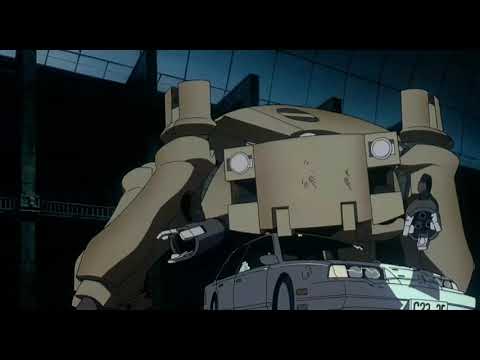
Muraki 4:11-4:35
The finale here is a collaboration between several of the top animators of the 90s, Mitsuo Iso layouts, followed by Hiroyuki Okiura, Toshiyuki Inoue, and Toayaki Emura effects. Just after Motoko is unable to damage the Spider Tank, she decides her better course of action is to evade its bullets and come up with a new plan of attack. Hideki Hamasu takes over after Motoko rips her jacket off. This is the first time seeing Muraki animate some heavy character movement. I’m sure Okiura and Kise heavily corrected the scene, as they did for most of the movie. These kind of acrobatics are exceptionally rare in Muraki’s case and you won’t see him tackle another scene like this usually ever. - CARMEN 💜Oct 29, 2023
Another series responsible for ushering in a new era of realism would be on Evangelion, where Muraki would assist on two of Takeshi Honda’s supervised episodes.

Likely opted in by Iso, or recommended by another animator on the Ghost in the Shell staff, Muraki was brought on to the amazing Episode 8, introducing Asuka Langely and Unit 02. Once an angel is spotted in the Pacific, Asuka and Shinji get into the action. An exciting sequence with Muraki working under more unusual circumstances given his background, getting into some weighty heroic Eva action. From the cool cape, to the jumping on the boats, despite the scene being over the top Honda still tries to get Muraki to have Unit 02 fall precision, and dart across the cruise ships like a giant child jumping on rocks across a pond. For obvious reasons Muraki did not do the character cuts. - CARMEN 💜Oct 29, 2023·edited
Muraki proving his stellar work on Ghost in the Shell was yet again brought on to Memories specifically the Stink Bomb segment

Even on his own merits, Muraki learned a lot from Okiura’s scenes from Patlabor making him ready to do military laden destruction. This of course came in the part where the military tries to destroy Nobuo, who’s noxious gasses after ingesting an experimental d*** are killing every living creature it comes in contact with it (except for plants and trees).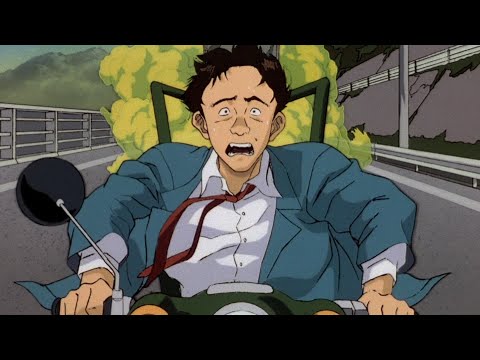
Muraki presumed at least for 3:23-3:56
Despite some curling shapes in the interior shading of the smoke, you can see Muraki being more inspired by modern Okiura, utilizing different tones of explosions, and likely communicating to the coloring department to have dual smoke layers painted brighter and darker tones in-between. I love how quickly these cuts are spliced together, with Muraki making the most out the destruction with impressive drawings of aircraft, missile launchers, and Naval cruisers.
Pair with goofy character acting, and it’s an interesting juxtaposition - CARMEN 💜Oct 29, 2023
On the second Honda supervised episode of Evangelion would be Episode 19, probably the most significant moment in the entirety of the series. After Shinji had returned to NERV to save everyone from the 14th Angel, just as the angel is about to kill Misato and the senior NERV staff Shinji comes in angrily defending his friends with an epic and decisive punch, beating the creature down as much as he can. This scene demonstrates just how perfectly Honda is entrusting of his animator’s abilities, and having idealized placement of where they should be. There is so much anger and ferocity in this sequence and through some heavy corrections by Honda, the feelings of Shinji, and severity of the situation are captured so well.
- CARMEN 💜Oct 29, 2023
After Evangelion wrapped, Muraki did some supernatural fight KA, on X: The Movie. Nothing crazy, but we can see how much Muraki had mastered Okiura’s and Iso’s effects styles, however, Muraki would go back to his routes on The End of Evangelion

Hideaki Anno’s tour de force, the movie has one of the most exciting action sequences in anime with Asuka vs the JSDF, and later the mass produced Evas. Muraki, once again working with Honda was placed on the military’s assault on Unit 02 after Asuka had her eureka moment, coming to terms with her mother’s love. Muraki here gloriously, yet shortly returns to his famous Itano Circus, complemented later on by grounded volumetric smoke. Even though Muraki had gotten so good at drawing Unit 02, he was still corrected by Honda.
Muraki first drawing, Honda second. Notice how Honda does not like dirty drawings, instead wanting very clean and unsketchy work. - CARMEN 💜Oct 29, 2023
Now for the next few years from 1997-2000, Muraki would not be doing a ton of significant work, aside from some decent scenes on Gasaraki and The Big O there really wasn’t much to report on an animation front. In 2000, on Escawflowne: The Movie, and Vampire Hunter D: Bloodlust Muraki had begun to rival Takashi Hashimoto’s effects working on excessive building destruction, with swashing smoke, and a lot of debris.
- CARMEN 💜Oct 29, 2023
Muraki would perfect his skyline devastation on Metropolis

The last hurrah of the 80s era masters with Rintaro at direction, and Katsuhiro Otomo on writing, it felt triumphant, and was a huge undertaking for Studio Madhouse. Rintaro really makes an incredible spectacle throughout the entire film, encouraging a blend of heavy hand drawn characters and effects courtesy of chief AD Yasuhiro Nakura the film had thousands of drawings, and cost nearly $9 million making it the most expensive animated film to date up to that point (the record holder now is Tale of Princess Kaguya at $43 million). Towards the end of the film, the character Rock overloads a super weapon meant to be used against the robots destroying the massive Ziggurat structure surrounding him and the main characters. What follows is a triumphant array of explosions helmed by Muraki and other animators, all discordant with the backing song being Ray Charles’s “I Can’t Stop Loving You”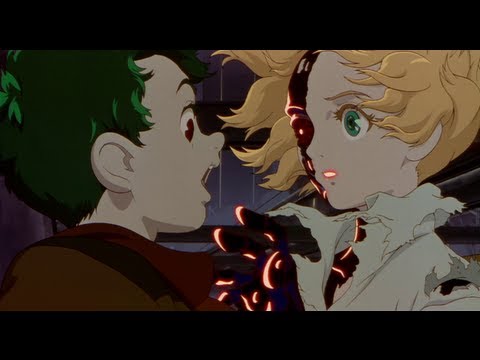
Muraki 0:13-0:31, 1:01-3:47 should be Hiroshi Hamasaki character acting with Muraki effects
Without a doubt one of Muraki’s crowning moments as an effects animator. In some split cuts he’s working on 1s and adding insane variation throughout the sequence, especially with the detail in the falling debris. Even against the cgi laden effects he still manages to stand out. 3:27 is the strongest cut due to the scale of destruction, with fiery plumes coming towards the right side of the screen, then Itano like explosion bubbles hoarding towards the camera. - CARMEN 💜Oct 29, 2023
After Metropolis wrapped up Muraki would immediately be rejoined with Ichiro Itano and Masami Goto, on Shinichiro Watanabe’s Cowboy Bebop: The Movie

While Hiroyuki Okiura was credited on the film, by this point he had completely moved away from effects laden layouts, and instead focused primarily on character acting. Without that grounded realism guiding Muraki, you think he wouldn’t fare well here? As evidenced by previous works he would do amazing. Goto, Muraki, and Itano were chiefly responsible for the space dogfight above Mars, as Spike single handedly takes out each fighter he encounters. Muraki was in charge of the first half of the battle.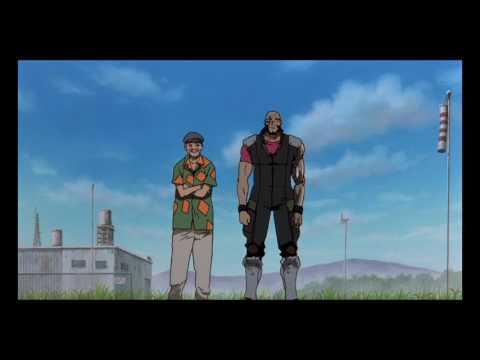
Muraki 0:08-1:20
This movie takes the cake for animated aerial dogfight scenes. The original series had amazing sequences, but here it feels like a serious step up. Muraki under the supervision of Goto, did a lot of background animation here, and the level of consistency he’s able to keep throughout his part is stunning. The flaring missiles, the closing distance of the fighters, the camera trickery to make cockpit shots look like POV photography, the volumetric smoke, even Muraki’s character acting with Spike has him turning with respect to the shadows cast by the sun as he turns the ship downwards. Sure this scene, doesn’t come close to Goto’s (1:55-3:16) which is probably the best animated aerial battle sequence of all time, but it is more interesting than Itano’s (5:09-5:45) who by this point had had less and less involvement in animation, and would later focus more on designs and direction for the rest of his career. - CARMEN 💜Oct 29, 2023·1 reply
Right after this film, Muraki would keep the momentum going with his action, but would take more of a backseat into directing. Specifically two episodes of RahXephon being Episode 4 and 7.

4 had his storyboards with Goto animating a few scenes , and 7 involved a lot of sci-fi dogfight action, outside of that even featuring animation from Bones superstar Yutaka Nakamura - CARMEN 💜Oct 29, 2023
Muraki would do brief spurts of animation after this doing a nuclear explosion on The Animatrix, and getting credited on Tree of Palme, Overman King Gainer and even getting a cut on Steamboy.
- CARMEN 💜Oct 29, 2023·1 reply
 Oct 29, 2023CARMEN
@ragedsycokiller Yasushi Muraki Pt. 1
Will add when I finally finish moving into my new home
 Oct 29, 2023
Nah Frieren fire
But I binged all 8 episodes out and now I gotta wait week to week
 FREE 💜Oct 29, 2023CARMEN
Right after this film, Muraki would keep the momentum going with his action, but would take more of a backseat into directing. Specifically two episodes of RahXephon being Episode 4 and 7.
4 had his storyboards with Goto animating a few scenes , and 7 involved a lot of sci-fi dogfight action, outside of that even featuring animation from Bones superstar Yutaka NakamuraNever seen this
 Oct 29, 2023
Apothecary diaries is rlly good so far!
 Oct 29, 2023flizzy
Started this trash:

Just finished this. The tone shift from the beginning of the anime to the end is crazy. They really want me to take it seriously at some point and I just found it corny. The last few episodes about saving Sakura Hall are relatively good but the anime didn’t lead up to it well. The emotional moments did not hit for me.
I also dislike how they handled the main love triangle. Think it should’ve been more of a conflict. Clearly the anime prefers Mashiro and tries to make her seem deep when she’s dumb as s***. Aoyama is a sweet girl but a dumb written character she is cucked at every opportunity and never confesses despite having many chances and the anime teasing it. The anime is making me prefer Mashiro just for being the most interesting character.
I also find it hard to believe the reputation of Sakura hall sucks so hard, basically they can do whatever they want I’d assume it’s every teenagers dream but I guess maybe Japan culture is different? Like they’re all good ppl there I think other teens would really take advantage of this situation lol. It’s also funny how they’re seemingly main characters of the school despite mostly being in their own circle.
Anyways I’m hating a little if you liked this anime it’s fine by me. It was a little comforting in the background but definitely not great.
