 Feb 7, 2022krishna bound
Amin didn't just support Pol Pot, he basically said Cambodia under him was the greatest socialist success in history up until that point

 Feb 7, 2022krishna bound
Amin didn't just support Pol Pot, he basically said Cambodia under him was the greatest socialist success in history up until that point
Pol Pot was a lunatic so that doesn’t help
 Feb 7, 2022
 Tkken
TkkenTbh I agree with you but im unsure of how to reconcile all of this with calls for social democracy in other parts of the world
Because if we are saying that improving your citizens' lives and relinquishing your dependency on the american empire is a movement towards socialism, then I feel like a person should also be supporting those types of reforms
I guess the question is, how does a person distinguish between non-socialist improvements as a transition period and non-socialist improvements aimed at pacifying the working class
I think the difference is that social democrats use socialistic appeals to reinforce and mediate the presence of capitalism with an agitated populace
The CPC is using capitalism to outcompete and dislodge an existent western imperialist structure to ensure a future where socialism will be introduced on the terms of the powerful rather than emanating from grassroots
- Feb 7, 2022·1 reply
OÜ: In post-Mao era, socialism was somehow reduced to economic development or simply GDP growth in Chinese official discourse. As we know, for Mao, socialism was much more than that. What he had in mind as gradual transition to classless society was also a process of establishing direct democracy of the toilers. So my question is: was this really the case in Maoist China?
FE: Of course. Defenders of Mao-era policies can dwell on the democratic aspect of them. But we should not fail to counter the total misconception of the capitalists who say economic growth is faster in the post-Mao era. That is utterly untrue! In the last few months, I looked through data from the National Bureau of Statistics of China (NBSC) to compare the growth rates. Yes, GDP is one measurement. But instead of using GDP, I measured grain production, cloth production, railroad transportation, power generation, coal production and some other basic components of economic growth. To my astonishment, other than cloth production and the GDP figure the speed of industrial development during Mao’s era was much higher than the development during Deng’s era. The truth is GDP was non-existent during Mao’s era and was fabricated by later officials. Also, in Mao’s era, service sector was not counted!
In Mao’s era, we had dormitories, cafeteria, nursery, libraries, trade school and so on in a factory. All these things are not counted as a part of GDP. But when you break them up, they all start to contribute to GDP. So, when this fact is taken into consideration, it can be seen that even during the supposedly “chaotic” last ten years of Mao’s era, the speed of development was faster than or at least equal to the speed of development in post-Mao era. Here are the facts (see Table 1).

In my a***ysis, I did not use potentially misleading measures like “gross output.” I just looked at how much cloth was produced, how much steel was produced, how much power was generated, etc. These kinds of measures run no risk being double-counted. I also excluded data for 1949–1951 to account for the devastation caused by the Revolution—a necessary period of recovery for Mao. So, I took data from 1952 to 1976, and then compared that with Deng’s period and beyond. Results are astonishing. While talking about Mao’s period, most people just say the people were sacrificed. This is empty talk, nothing more. Only by making people the masters of society can you have such rapid economic development!
Compared to other economically underdeveloped countries like India or Brazil, the recent economic development of China under capitalism is also very fast. This cannot be denied. That’s why people keep talking about the “Chinese miracle” today. But the thing is economic development under socialism is faster. Note a simple fact in the history: after Soviets crushed the reactionaries in the Civil War, from 1921 to 1941, Russia went from a backward industrial society on the outskirts of Europe to a highly industrialized super-power. A span of twenty yearsimmediately after a devastating war. Compared to the Soviet Union, what happened to China in the last 40 years was nothing. Like in the Soviet Union, socialism achieved a remarkable economic success in Mao’s China. So it is a fallacy that the economic growth was sacrificed during Mao’s period to make people feel better. This is not true.
- Feb 7, 2022
 ARCADE GOON
Knowing that he (like other Maoists and Dengoids) supported Pol Pot in the Kampuchea Civil War soured me on him
I suppose his views on eurocentrism are interesting though.
what do u think on his concept of delinking?
 Feb 7, 2022·1 replyWomanpuncher69
OÜ: In post-Mao era, socialism was somehow reduced to economic development or simply GDP growth in Chinese official discourse. As we know, for Mao, socialism was much more than that. What he had in mind as gradual transition to classless society was also a process of establishing direct democracy of the toilers. So my question is: was this really the case in Maoist China?
FE: Of course. Defenders of Mao-era policies can dwell on the democratic aspect of them. But we should not fail to counter the total misconception of the capitalists who say economic growth is faster in the post-Mao era. That is utterly untrue! In the last few months, I looked through data from the National Bureau of Statistics of China (NBSC) to compare the growth rates. Yes, GDP is one measurement. But instead of using GDP, I measured grain production, cloth production, railroad transportation, power generation, coal production and some other basic components of economic growth. To my astonishment, other than cloth production and the GDP figure the speed of industrial development during Mao’s era was much higher than the development during Deng’s era. The truth is GDP was non-existent during Mao’s era and was fabricated by later officials. Also, in Mao’s era, service sector was not counted!
In Mao’s era, we had dormitories, cafeteria, nursery, libraries, trade school and so on in a factory. All these things are not counted as a part of GDP. But when you break them up, they all start to contribute to GDP. So, when this fact is taken into consideration, it can be seen that even during the supposedly “chaotic” last ten years of Mao’s era, the speed of development was faster than or at least equal to the speed of development in post-Mao era. Here are the facts (see Table 1).
In my a***ysis, I did not use potentially misleading measures like “gross output.” I just looked at how much cloth was produced, how much steel was produced, how much power was generated, etc. These kinds of measures run no risk being double-counted. I also excluded data for 1949–1951 to account for the devastation caused by the Revolution—a necessary period of recovery for Mao. So, I took data from 1952 to 1976, and then compared that with Deng’s period and beyond. Results are astonishing. While talking about Mao’s period, most people just say the people were sacrificed. This is empty talk, nothing more. Only by making people the masters of society can you have such rapid economic development!
Compared to other economically underdeveloped countries like India or Brazil, the recent economic development of China under capitalism is also very fast. This cannot be denied. That’s why people keep talking about the “Chinese miracle” today. But the thing is economic development under socialism is faster. Note a simple fact in the history: after Soviets crushed the reactionaries in the Civil War, from 1921 to 1941, Russia went from a backward industrial society on the outskirts of Europe to a highly industrialized super-power. A span of twenty yearsimmediately after a devastating war. Compared to the Soviet Union, what happened to China in the last 40 years was nothing. Like in the Soviet Union, socialism achieved a remarkable economic success in Mao’s China. So it is a fallacy that the economic growth was sacrificed during Mao’s period to make people feel better. This is not true.
Great post
- Feb 7, 2022Cudderwalks
Great post
got it from here if u want to read more
rupe-india.org/74/struggle.html  Feb 7, 2022·1 reply
Reread the section on commodity fetishism and dam he was rly spitting fr

"What, first of all, practically concerns producers when they make an exchange, is the question, how much of some other product they get for their own? In what proportions the products are exchangeable? When these proportions have, by custom, attained a certain stability, they appear to result from the nature of the products, so that, for instance, one ton of iron and two ounces of gold appear as naturally to be of equal value as a pound of gold and a pound of iron in spite of their different physical and chemical qualities appear to be of equal weight. The character of having value, when once impressed upon products, obtains fixity only by reason of their acting and re-acting upon each other as quantities of value. These quantities vary continually, independently of the will, foresight and action of the producers. To them, their own social action takes the form of the action of objects, which rule the producers instead of being ruled by them. It requires a fully developed production of commodities before, from accumulated experience alone, the scientific conviction springs up, that all the different kinds of private labour, which are carried on independently of each other, and yet as spontaneously developed branches of the social division of labour, are continually being reduced to the quantitative proportions in which society requires them. And why? Because, in the midst of all the accidental and ever fluctuating exchange relations between the products, the labour time socially necessary for their production forcibly asserts itself like an over-riding law of Nature. The law of gravity thus asserts itself when a house falls about our ears.29 The determination of the magnitude of value by labour time is therefore a secret, hidden under the apparent fluctuations in the relative values of commodities. Its discovery, while removing all appearance of mere accidentality from the determination of the magnitude of the values of products, yet in no way alters the mode in which that determination takes place."
- Feb 7, 2022·2 repliesScratchin Mamba
Reread the section on commodity fetishism and dam he was rly spitting fr
"What, first of all, practically concerns producers when they make an exchange, is the question, how much of some other product they get for their own? In what proportions the products are exchangeable? When these proportions have, by custom, attained a certain stability, they appear to result from the nature of the products, so that, for instance, one ton of iron and two ounces of gold appear as naturally to be of equal value as a pound of gold and a pound of iron in spite of their different physical and chemical qualities appear to be of equal weight. The character of having value, when once impressed upon products, obtains fixity only by reason of their acting and re-acting upon each other as quantities of value. These quantities vary continually, independently of the will, foresight and action of the producers. To them, their own social action takes the form of the action of objects, which rule the producers instead of being ruled by them. It requires a fully developed production of commodities before, from accumulated experience alone, the scientific conviction springs up, that all the different kinds of private labour, which are carried on independently of each other, and yet as spontaneously developed branches of the social division of labour, are continually being reduced to the quantitative proportions in which society requires them. And why? Because, in the midst of all the accidental and ever fluctuating exchange relations between the products, the labour time socially necessary for their production forcibly asserts itself like an over-riding law of Nature. The law of gravity thus asserts itself when a house falls about our ears.29 The determination of the magnitude of value by labour time is therefore a secret, hidden under the apparent fluctuations in the relative values of commodities. Its discovery, while removing all appearance of mere accidentality from the determination of the magnitude of the values of products, yet in no way alters the mode in which that determination takes place."
Crazy how some "Marxists" read this and then say "There is no labor theory of value by Marx"
- Feb 7, 2022ARCADE GOON
Crazy how some "Marxists" read this and then say "There is no labor theory of value by Marx"
RICARDIAN!!!!
- Feb 7, 2022ARCADE GOON
Crazy how some "Marxists" read this and then say "There is no labor theory of value by Marx"
The reason they do this is so they can call the USSR capitalist btw, that's all it really is lol
- Feb 7, 2022
That first paragraph in that section
"A commodity appears, at first sight, a very trivial thing, and easily understood. Its a***ysis shows that it is, in reality, a very queer thing, abounding in metaphysical subtleties and theological niceties. So far as it is a value in use, there is nothing mysterious about it, whether we consider it from the point of view that by its properties it is capable of satisfying human wants, or from the point that those properties are the product of human labour. It is as clear as noon-day, that man, by his industry, changes the forms of the materials furnished by Nature, in such a way as to make them useful to him. The form of wood, for instance, is altered, by making a table out of it. Yet, for all that, the table continues to be that common, every-day thing, wood. But, so soon as it steps forth as a commodity, it is changed into something transcendent. It not only stands with its feet on the ground, but, in relation to all other commodities, it stands on its head, and evolves out of its wooden brain grotesque ideas, far more wonderful than “table-turning” ever was"
- Feb 7, 2022·1 reply
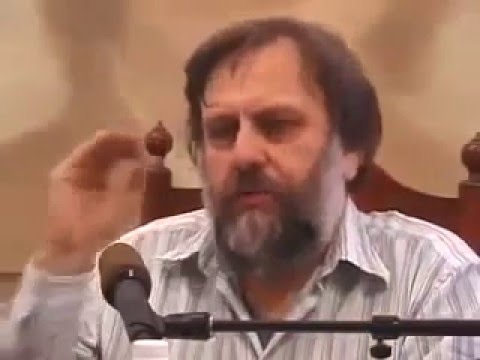
Love how Zizek explained it
- Feb 7, 2022·3 repliesScratchin Mamba
Love how Zizek explained it
!https://youtu.be/SsFC3FuuRVwyeah but did Marx take into account kink fetishism ?
- Feb 7, 2022Womanpuncher69
yeah but did Marx take into account kink fetishism ?
Marx was pro-kinkshaming
- Feb 7, 2022
Marx failed to consider feet
 Feb 7, 2022Womanpuncher69
yeah but did Marx take into account kink fetishism ?
nah that's what u can add
Marxist-Leninist-Maoist-Chokingist
- Feb 7, 2022·1 replyWomanpuncher69
yeah but did Marx take into account kink fetishism ?
Lmao a liberal friend of mine said he read Capital and then he talked like commodity fethishism means liking products a lot
For those who don't know: A fetish is originally a religious term meaning you give something ordinary a mystical power. A totem pole is a painted wooden pole but becomes an idol object of worship. Commodity fethish is thus an a***ogy to religion. The commodity appears ordinary but with the "religion" of capitalism it actually has connotations beyond its mere physical appearance.
The term sexual fetish means you give some thing a higher importance sexually than it has for the average person, this term came later
- Feb 7, 2022·1 reply
are there are current general leftist/marxist economists who have written anything on future lending and on market hijacking from traditional market profit incentive to investment incentive? I've seen like far right people talk about similar topics but i've never seen any real left addressing of such besides maybe vague allusions
- Feb 7, 2022·1 replykrishna bound
are there are current general leftist/marxist economists who have written anything on future lending and on market hijacking from traditional market profit incentive to investment incentive? I've seen like far right people talk about similar topics but i've never seen any real left addressing of such besides maybe vague allusions
I know David Harvey has talked about financialization quite a bit, I never read the book myself but I know he touches upon it in "accumulation by dispossesion" and i think also in "a brief history of neoliberalism"
- Feb 7, 2022·1 replyScratchin Mamba
I know David Harvey has talked about financialization quite a bit, I never read the book myself but I know he touches upon it in "accumulation by dispossesion" and i think also in "a brief history of neoliberalism"
thanks, i'll check it out. one of the reason i bring it up is because i notice a lot of left-leaning and even far-left people still like to bring up essentially early 1900s economic structures and say they're still applicable to today's world and economy when especially in the west things are clearly distinct albeit still obviously exploitatively capitalist. I haven't seen many left economists bring up the kind of drastic evolution of the economic system in modern times and a lot of a***yses are thus done under kind of outdated economic lenses; i'm interested in further left perspectives of these new age economic systems though, I just can't really find any.
- Feb 7, 2022·1 replykrishna bound
thanks, i'll check it out. one of the reason i bring it up is because i notice a lot of left-leaning and even far-left people still like to bring up essentially early 1900s economic structures and say they're still applicable to today's world and economy when especially in the west things are clearly distinct albeit still obviously exploitatively capitalist. I haven't seen many left economists bring up the kind of drastic evolution of the economic system in modern times and a lot of a***yses are thus done under kind of outdated economic lenses; i'm interested in further left perspectives of these new age economic systems though, I just can't really find any.
I mean it really isn't fundamentally different, it's just that one sector has become more dominant over others. The fundamental a***ysis remains relatively unaltered. I think the bigger shift that has more consequences in terms of a***ysis is the departute of the gold standard
- Feb 7, 2022
This is the biggest joke of a “communist party” I have ever seen. What a stupid statement
- Feb 7, 2022·1 replyScratchin Mamba
I mean it really isn't fundamentally different, it's just that one sector has become more dominant over others. The fundamental a***ysis remains relatively unaltered. I think the bigger shift that has more consequences in terms of a***ysis is the departute of the gold standard
Well, I mean more that I haven't seen much a***ysis in terms of business incentive. The incentive of businesses used to be pretty straightforward; it was essentially just, you know, dominate as much as possible essentially get as much profit as possible by not only dominating your industry but also exploiting labor as much as possible so the difference increases profit. However, this isn't necessarily true in modern times - I mean, don't get me wrong, it still "is", but as you say, there's kind of multiple things which have occurred in the modern economy which have caused it to differentiate it from the pre-modern economy;
A) departure from gold as you say but also re-focus from intrinsic value to unified and infinitely scalable currency detached from value itself
B) hyper-globalization of the economy, banking, etc
C) instantaneous operations/communications/actions
there are obviously other things but i focus on the above because they're probably the most poignant in terms of what i'm talking about.
there's two very specific behaviors which exist now which didn't exist for pre-modern businesses;-investment as a viable business operation instead of actual growht or profit; essentially, there is an increasing model where companies do not need to actually grow in order to become more powerful or profitable - they do not need to increase sales or increase operations, instead, all they need to do is get to a certain threshold, then refocus their business on investment rather than actual substantial growth ; this is the whole "silicon valley playbook", the entire way silicon valley companies work is literally a applicable piece of paper anyone can do, it's basically a pre-set of steps to keep a company going for ever regardless of if it even has a business model or conducts labor ; this essentially turns the economy into a quasi ponsi-scheme
-"future lending" (idk if this is the right term because im not an economist) is really only possible as a result of current economic and legal norms. this is basically like in addition to the above the house of cards much of the western economy is built on is built on an unsustainable model where money or value does not really exist in a present sense, but rather exists under the assumption that the future will be profitable enough that relative amounts of money used in the present are simply borrowed from the growth assumed to happen in the future
there's also more to it i've read elsewhere, but i'd be interested to see a real marxist economists's view of things. one thing i've been interested is the idea of illusory economic growth
- Feb 7, 2022·2 replieskrishna bound
Well, I mean more that I haven't seen much a***ysis in terms of business incentive. The incentive of businesses used to be pretty straightforward; it was essentially just, you know, dominate as much as possible essentially get as much profit as possible by not only dominating your industry but also exploiting labor as much as possible so the difference increases profit. However, this isn't necessarily true in modern times - I mean, don't get me wrong, it still "is", but as you say, there's kind of multiple things which have occurred in the modern economy which have caused it to differentiate it from the pre-modern economy;
A) departure from gold as you say but also re-focus from intrinsic value to unified and infinitely scalable currency detached from value itself
B) hyper-globalization of the economy, banking, etc
C) instantaneous operations/communications/actions
there are obviously other things but i focus on the above because they're probably the most poignant in terms of what i'm talking about.
there's two very specific behaviors which exist now which didn't exist for pre-modern businesses;-investment as a viable business operation instead of actual growht or profit; essentially, there is an increasing model where companies do not need to actually grow in order to become more powerful or profitable - they do not need to increase sales or increase operations, instead, all they need to do is get to a certain threshold, then refocus their business on investment rather than actual substantial growth ; this is the whole "silicon valley playbook", the entire way silicon valley companies work is literally a applicable piece of paper anyone can do, it's basically a pre-set of steps to keep a company going for ever regardless of if it even has a business model or conducts labor ; this essentially turns the economy into a quasi ponsi-scheme
-"future lending" (idk if this is the right term because im not an economist) is really only possible as a result of current economic and legal norms. this is basically like in addition to the above the house of cards much of the western economy is built on is built on an unsustainable model where money or value does not really exist in a present sense, but rather exists under the assumption that the future will be profitable enough that relative amounts of money used in the present are simply borrowed from the growth assumed to happen in the future
there's also more to it i've read elsewhere, but i'd be interested to see a real marxist economists's view of things. one thing i've been interested is the idea of illusory economic growth
To your second to last point I think there actually are quite a bit of Marxists who have talked about this, Zizek talks about this in that it's like an enclosure of our "digital commons" and that those tech giants make money off digital rent more than exploitation of labor.
I've looked it up and Cedric Durand wrote two books about these topics called "Techno Feudalism" and "Governing By Debt"
