 OPApr 22, 2024·1 reply
Need updates on Rep. of Congo/DRC + Sudan etc as well
don't know how much new information has been coming out if any at all
 Apr 22, 2024·1 replyspongebob
Need updates on Rep. of Congo/DRC + Sudan etc as well
don't know how much new information has been coming out if any at all
- OPApr 22, 2024·1 replysnowboyrari
https://www.facebook.com/SudaneseCommunistParty?mibextid=kFxxJD
follow
i don’t have an account on that site. any good alternatives they use?
- Apr 22, 2024spongebob
i don’t have an account on that site. any good alternatives they use?
its not quite as active but they also have a twitter
- Apr 28, 2024
abahlali basemjondolo calls for revolutionaries to vote for EFF
- May 16, 2024·1 reply
which websites do y'all use to keep up with african politics, specifically western africa (ghana, nigeria, cameroon, etc.)?
- May 16, 2024training
which websites do y'all use to keep up with african politics, specifically western africa (ghana, nigeria, cameroon, etc.)?
black agenda report
- OPMay 17, 2024
 May 18, 2024·2 replies
Would someone be up for making Sudan and/or Congo threads?
Having a hard time finding reliable information and keeping up but what I do catch is insane
- May 18, 2024MrMudManMood
Would someone be up for making Sudan and/or Congo threads?
Having a hard time finding reliable information and keeping up but what I do catch is insane
seems like this thread is satisfactory for discussing this, what exactly are you trying to keep up with
- OPMay 19, 2024MrMudManMood
Would someone be up for making Sudan and/or Congo threads?
Having a hard time finding reliable information and keeping up but what I do catch is insane
I have a few thoughts on this
There have been times I've had current happenings in the title like to do with sudan or congo so if you have suggestions of stuff to add in the title stuff thats particularly urgent or something new is popping off im down to add that,
I'm interested in what coverage you have been catching and why is it insane,
I do think that there's not that much constant discussion in this sxn in general about those countries but people will contribute to a thread if they wanna talk about it
I've also been wanting more coverage of sudan and congo but I'll try to find a few articles on each to throw some stuff out there
- OPMay 19, 2024
Sudan
africanews.com/2024/05/18/sudan-un-condemns-escalation-of-violence-in-el-fasher-in-darfur
The U.N. Human Rights chief Volker Turk expressed horror at the escalating violence situation in Sudan's El Fasher in Darfur where hostilities between the Sudanese Armed Forces and the Rapid Support Forces are severely impacting civilians.
"At least 58 civilians are reported to have been killed and 213 others injured in El Fasher since fighting dramatically escalated last week, and these figures are certainly an underestimate," Ravina Shamdasani, the spokesperson for the Office of the UN High Commissioner for Human Rights (OHCHR) told a news briefing in Geneva.
Shamdasani said Turk had held phone conversations with both sides and had urged them to put aside entrenched positions and take specific, concrete steps to cease hostilities and to ensure the effective protection of civilians.
“We warned both commanders that fighting in El Fasher, where more than 1.8 million residents and internally displaced people are currently encircled and at imminent risk of famine, would have a catastrophic impact on civilians, and it would deepen intercommunal conflict with disastrous humanitarian consequences.”
On Wednesday, Clementine Nkweta-Salami, the top U.N. humanitarian official in the war-ravaged country, told a U.N. news conference that hostilities in El Fasher have been escalating and clashes over the weekend and early this week caused dozens of casualties and displaced many more of the 800,000 people still in the city.
She said the Sudanese people were trapped in a situation of brutal violence with famine, disease and fighting closing in and no end in sight.
Earlier this month, the U.N. food agency warned Sudan’s warring parties that there is a serious risk of widespread starvation and death in Darfur and elsewhere in Sudan if they don’t allow humanitarian aid into the vast western region.
Sudan plunged into conflict in mid-April 2023, when long-simmering tensions between its military led by Gen. Abdel Fattah Burhan, and the paramilitary Rapid Support Forces commanded by Mohammed Hamdan Dagalo, broke out into street battles in the capital, Khartoum.Fighting has spread to other parts of the country, especially urban areas and the vast western Darfur region, and the U.N. says over 14,000 people have been killed and 33,000 injured.
The paramilitary forces, known as the RSF, have gained control of most of Darfur and are besieging the key city of El Fasher, the capital of North Darfur and the only capital they don’t hold.
On April 15, donors pledged $2.1 billion in humanitarian aid for Sudan, but Nkweta-Salami said the U.N.’s $2.7 billion humanitarian appeal -- to help nearly 15 million of the country’s 58 million people -- is just 12% funded.
- OPMay 19, 2024
Congo
africanews.com/2024/05/09/families-of-congo-attack-victims-mourn-their-losses
Families of the victims of last week's bomb attacks in eastern Congo mourned their loved ones at a ceremony in Goma.
The bombings at Mugunga and Lac Vert camps killed 18 and injured 32. The type of explosives used remains unclear. Most victims were women and children.
Eye witness
Alimeti Kigiho, who survived the attack, had sought shelter from eastern Congo's long war at the Mugunga displacement camp in February, only to be shaken by explosions while going to fetch water.
He ran back to his tent, where he found the bodies of his wife and two young children, aged 6 and 2, in pieces.
"War has taken everything from me," Kigiho, 45, told the Associated Press.
Who is to blame?
The Congolese army and a rebel group known as M23 have blamed each other for the bombings. The March 23 Movement, or M23, is a rebel military group mainly made up of ethnic Tutsis that broke away from the Congolese army 12 years ago.
The decades-long conflict in eastern Congo has produced one of the world's worst humanitarian crises, with over 100 armed groups fighting in the region, most for land and control of mines with valuable minerals.
Some are fighting to try to protect their communities. Many groups are accused of carrying out mass killings, rapes and other human rights violations.
Accusations
Congolese President Felix Tshisekedi accuses neighbouring Rwanda of destabilizing Congo by backing the M23 rebels. U.N. experts, along with the U.S. State Department, have also accused Rwanda of backing the rebels. Rwanda denies the claims.
Some of the mourners at the ceremony on Monday criticized President Tshisekedi along with the international community for failing to end the long-running conflict.
"If he is unable to end this war, he should resign," Bienfait Bonane, a youth from Goma, told the Associated Press.
The violence has displaced about 7 million people, including thousands living in temporary camps like the ones attacked last week. Many others are beyond the reach of aid.
The attacks have driven some residents in the camp to consider returning to their homes, despite the dangers that caused them to flee in the first place.
- OPMay 19, 2024spongebob
I'ma throw some out there i find on google lol


bump because dam these are interesting too

- OPMay 19, 2024space0cadet
Well in the 14th and 15th century Europe had a slight advantage over Africa in terms of their system of production.
Only a select few areas were moving into a Fuedal means of production (Egypt and Ethiopia), compared to Europe which was moving into capitalism.
Europe was moving into statehood while national unification was a product of mature feudalism and of capitalism, so that was definitely a predisposition to being exploited.
Europe had the biggest advantage in ships. Europes took the initiative and went to other parts of the world. No Chinese boats ever reached Europe at this time, and if any African canoes reached the Americas, there was no two-way connection.
So Europe owned and directed the majority of the worlds sea-going vesselss and they controlled the financing of the trade between four continents.
Europe used the superiority of their ships and cannons to gain control of all the world's waterways, starting with the western Mediterranian and the Atlantic coast of North Africa. That was in the beginning of the 15th. The portugese captured Ceuta, near Gibaltrar, and other ports like Tangier. By the second half of the 15th century they controlled the atlantic coast of Morocco and used their economic advantages to carry ships around the cape of good hope in the beginning of the 16th. After this, they completely replaced the Arabs as the merchants who tied East Africa to India and the rest of Asia.
The trade in human beings from Africa was a response to extenral factors. Since Europe had such a small population compared to Africa and Asia, the labor was needed internally as well as externally for their colonies. First came the need for labor in Portugal, Spain, and in Atlantic islands like Cape Verde and the Canaries. Then came the period when the Antilles area of Latin America needed replacement for the Indians who were victims of genocide; and then the demands for plantation societies had to be met.
Once Europe became more industrialized they began flooding the markets with cheap goods that directly undercut traditional industries of Africa, leading to technological stagnation (why would you innovate, or even continue to work in an industry which you don't get any $ from?)
- May 19, 2024·1 reply
apnews.com/article/congo-kinshasa-gunfire-1a148e35f0cbbae14b2101413f788708
fascist coup in the Congo averted, Christian Malanga got his dumb ass clapped
- OPMay 19, 2024snowboyrari
https://apnews.com/article/congo-kinshasa-gunfire-1a148e35f0cbbae14b2101413f788708
fascist coup in the Congo averted, Christian Malanga got his dumb ass clapped
 that us embassy in congo statement
 - May 20, 2024
@Snowboy @spongebob gonna get back to the both of you sometime later my bad
 May 20, 2024
The closer SA gets to the elections the less excited I get, our opposition parties are useless

 May 22, 2024·1 reply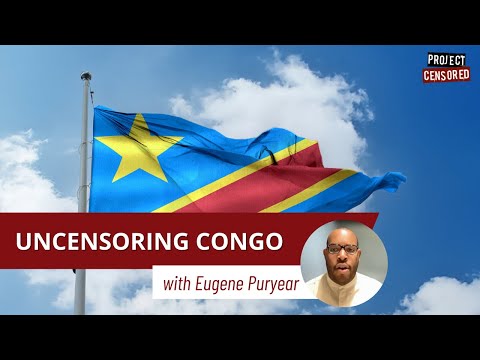
- OPMay 23, 2024·1 reply!https://www.youtube.com/watch?v=_Xv-WL1ZJ2gJaeRell
@Speak this is new and the videos i’ve seen before are fairly helpful in breaking it down if you’re interested
- May 23, 2024spongebob
@Speak this is new and the videos i’ve seen before are fairly helpful in breaking it down if you’re interested
Thank you
You too @JaeRell  Jun 1, 2024·2 replies
- Jun 1, 2024·1 replyhttps://twitter.com/tasetireloaded2/status/1796561975226634268Babaláwo
bro is yapping and being stereotypical. everyone already knows the sahel is the current hotbed of pan-africanism, the election in south africa doesnt prove something. if you wanna have a conversation about the anti-immigration far-right in South Africa and its causes then do it but the majority of black south africans are pan-africans.
