 Jun 23, 2021·1 reply
 blonded
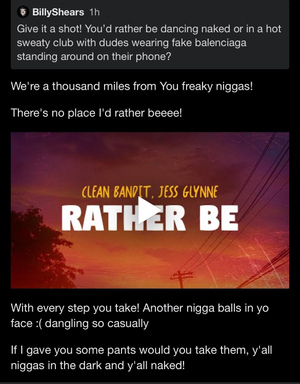
B̴̢̨̯͎̹̖͎̪͐̈́̀̿̿͝͠ȩ̴̨͎̤̝̱̘̘̽̀l̵͉̲͇͋ỉ̷̛͉͉̰̱͍͇̀̉̊̄̏̂e̵̟̝͔̟̓̌̓̔̐͌̕͝v̷̛̛̩͔̻̻̯̭͈̓̋̿̾̚e̶̤̣̟̞̥͇̻͗̌͂̒͘ ̵̠͓̊Ḭ̸̛̗̺͉̪̬̂̊͛̂̄n̵̡̞̫̘̦̊̽̾̆̑̾̀ ̸̜̲͙̌͑O̶̢̡̼̯̩̝̐͒̇̇̊̈̈n̴̛̰̺̟͆̇́̕̕͝͝ė̶̮̜̦̀̉̿͘ͅ ̶͖̓͂̂̓͗Ġ̶̬̩͍̬̘̼͗̕̕ǫ̶̫͓̏́̾͑̽͝d̸̜̖̯̍͐̔̎ ̵̞͖͆͐̒̍̽͒̔̀D̴̡̟̥͍͆͐̅͐̆͆͘o̸̻̘̮̱̞̮͐ ̴͕̩̈́̎̀͋̚W̸̳̗͉̱͇͇̦̉͑̀͝e̴̡̧̪̹͔̪̜̣͂͒̆̋
̸̺̖̈́̀̍̚͝S̵̨͕̓͠ḁ̶̍̒̀͛̽̎t̷̡͖͍͚̹̰͌a̷͈̖̻̞̻̾̀̔n̸̰͇̰͙̊́͌̾̏̃̅ ̴͉͔̀͂̊̂͆Ȃ̷̧̻͙̦̥̇l̴͙͗͂̊̇͗̅͋̕ͅm̴̨̮͚̬̗͕̜͔͒̓́̾͝i̶̡̼̮̩̰͊͌̽́́̓͝ĝ̶̣͑͛̎̓h̶͚͇̲̜̒t̶̗͉͆͜y̸̢̲̖̫͈̓̎̀̍̈́͊
̸̗̯̗̳̳̮͐T̴̞̄͐h̷̩͈̰̼̖̩̼͐͐̈́̎́̈̕͜ȩ̷̩̜̭̥͍͑͜͜ ̴̧̡̡̳͉̖̲̠̎́U̵̡̩̟͌́̎̌͝ͅņ̶̬̘̽c̸͓̄̉̇̆͌͘͠r̷̢̡̞̤̼͇̖̦̈́͋e̶͙͚͒̏̈́̃ä̷̡̟̰́̾̅̒ţ̴̞̻̹̈̊̎o̷̲̔̕r̴̬̣͉̻̲͉̋̎͒̂̋͘ ̵̬̒̽̀̈́O̶̼̺̭͊͜͠f̴̢̠̰̠͉͗ ̶̡̛̲̻̫̦͈͕̑̄́͜Ḧ̷̨̼́̅̊̒e̸͇̩̅̿̌̅͘ă̷̘̄̓̑̉v̶̬̩̤̌̐ͅę̸̧̛̭͈͌̆n̸̪͆̾͒͂͌ ̶̯̟͎̭̤̯́͛̑Ậ̸̘̲̬́̔͌̔̽̐̚n̸̯̙͐̌̇̄͛d̸̢̡͍̮̩͈̣̕ͅ ̸̼͍̀̒̊͌̈́̈̋̓S̵̢̯̪̜͇̀̌̎̍͂̈́̚o̷͕̲̘̖̘͕̕͜u̴̬͆͊͊͒̿̔͂l̸̙̖͇͎̗̖̓͗̆̈́͝͝ͅ
̸̢̫̯͙̗̗̲̭̈́̎̒͘Ắ̶̘̼̹͇̊͜͠n̸͉̞̭̪̩͎̈́̂͋͂̒̎͠ͅd̷̡͈͎̺̝͎̥̋͝ ̵̩̹͚̋͆T̴̨̨̝̟̯͘h̸̲̖̦̎̌͋̊́̂́̕é̴̻̪̤͕̘̯̯̰͌̋̃̂ ̸̢̫̳̞͎͕͖̈́U̷̦̜̝̻̣̓̈́̑̅̍͊̂̓n̴͔̻̿̃̂̅̈́̇̂͠v̶̘̥͉̠̗̂̿̍̊̈́͠í̸͇̰͓̼̃̋̓͂͘ș̸̲͖̝̓̓̐̐͆a̸̧̛̛̯͔̮͑̄̈͂ḇ̵̯͈̟̱͖͙̋̅͠l̷̡͙̼̻͈͒͒é̵͚̳͙̟͕̓̎̍͊̍̓̽ͅͅ ̶̡̖͉̞͈̘̾͆̑͝͝Ȃ̴̡̠͚̞̹̹̀̍̊͑̊͘͘n̴̢̧̘̘͂́͛͋͆͝ḑ̷̖̰̫̰̌ ̶͉̼̬̅T̷̲͇̱̗̂̌̌̆͘͘ͅh̷̢̟̮̝̦̟̖̳́̅̓͐̿͛̑̎ḝ̵͖̬̞̟̯͜ͅ ̵̝̥̲̎̑̏͋̔͝V̵̫̗̻̱͉́̔i̷͖̺͍̎͒ͅs̴̰̫̙̗̬̹̙̊͂ą̷͙̳͎̀ͅb̷̲͓͈̈́̾͐ḷ̷̡̩͇́́̑̀̋͒̕͠ẻ̴̯̮͍̙͓̈́̓̎̒
̵̡̛͕͎̱͇̯͕͔̔̂̓A̴̧͉͇̝͇̯̪͇͐̏͌͊̉̄͠n̵̝̩̜̰̬͖͑̑̄ͅḍ̶̭̫̬̕̚ͅ ̵̧̛̟̙͂͝Î̵̢̃̐n̵̺͐̆̀̐̽̋ ̴̢̛̳͕͉̹̳̎̓͑̽̎H̷̼͎̪̝̦̦̀̄͗̓́̌͆̕ͅỉ̴̙̜̞̼̦̞͊̍͜͜s̴̹̯̓͗ ̵͕̙̝̀̅͗́͝ͅS̵͕͙͚̾́ơ̸͓͍͍̥̠͈͒̎̔̅̅ͅn̴̛͕̿͂̎̎͠
̴͎̖̻̊͛̓B̶̻̬̰̔́̂́͘ͅe̴̗̜͖͍͚̗͋̑̈́̉͛̚g̵̘̈́̓̈́̐́͌̉͘ỏ̴͖̉ţ̶̥̤̞͙̎̓̏̈͌͘͠t̷̯͉̠̋̓͋́͛͑̅̏e̴͕̓̓̿̔̅̕͘͝n̸̨̨͕̓̄͋̔̆͛͊͝ ̶̡̡̢̣͔͕̗̄͠ͅŐ̷͇͉͉̥̣̗͍̓f̵̡͚̘̄̾ͅ ̸̢͓͙̟͚̬̮̼͛̑̆͋̀͝F̵̜̦̠̯͎̩̀̈́̈́̚ā̷͓̼̬̹̺̀͆̋̔̓̂ţ̸̩̜̭́̅h̴̢̝͕̀̿̏̍̅ȩ̵̙͍͔̳͆r̵̨̾
̴͈̺̖͉̞͎͑̑͑̎B̵̨̨̛̤̖̗̌̀̀̍̕ȳ̷̨̟̣͚̺͈̞̭ ̸̡̜̥̪̖̯͖͆̍̒̒̑ͅẂ̴͈̳̤̀̊̏h̶̤̟̞̽͛̏̌̐̐̕͝o̴͕̼͚͙͉̼̜̞͗̋̿͂̓ṁ̸̹̭̥̀̃ ̶̢̮̝͉̈́̀́A̴̡͚̿͠ļ̴̥̭͕̗̖̰̐̃͑͑̄̄̄͘ĺ̶̢̲͇̥̑̇͂͂͜ͅ ̶̨̢̧̤̫̥̪͆̀͗ͅT̵̡͕̥̣̥̐̀̌̒͜h̴̗̀̽͂i̴̛̬͕̭̱̲̳͙̼͋̈́̅̈͝n̷̛̳̼͚̳͕͚̩͛̐̃͂͠͝g̵̦̠͈̟͋̇̀̑͊͛͘͘s̸̨̲͆͛́ ̷̧̜͍̣̓̋̒̓̀͂̍S̵̜̩͑̊͒̋͆͗͛͠h̴̡̖̭̦̤̳̤̹̋̇̓̆̂a̵̢̡̼̱̤͛̉͘l̶̪̥͍͙͑̓͊̕͝ͅl̷̢͇̩̟͎͇̜̎͠ ̷̻̟͉͖̎̈͝B̶͍̘͖̥͕̃̆͌̈͘͝ë̸̢̐ ̷̫̭̞͔̑̂̈́͛̔̇̽͘ͅŲ̶͕͓̀͘͠ň̷̢̟̱̫̺̰̚m̵̡̡̦̻̹̖̻̏̾̉̀̀a̴͉̽̿̽̃d̶̹̫̱̥̼̥̮̍̈́̽̿e̷̮͂̾̓̽̈͝
̴̳̺͇̗͚͓̞̔Ŵ̴͈͂h̸̜̭̖͊͛̈͋̕ǫ̷̼̬̳̋́ ̸̹͉̻̯̀̔̽͂͝F̶̺̟̟̩̗͔͇̮̉̒͝ỏ̵̧̭̟̟̼͈͐́͗́ͅr̷̮̱̱̈́͐́̍̚͘ ̵̡̜̮̗̜̖̃̋̉̔̽̌̈́͜M̶̮̓͋̒͐̀̚a̵̢̖̱̣̖͖̔n̸̢̪̠̤̱̼̜̟̈́͒̽ ̸̡̖̪̹͙̯̺̩̅Â̴̡̢̡̡̠̻͍̔ñ̶͈̦͎̫̚͝ͅd̷͕̯̫̖̗͉͓̟͑ ̷̡̱͉̄̅̓̐͛͝͝Ḩ̴̀͗̆̽̔̓̕i̴͕͇̹͐̊͘s̶̩̈̈́͗̾͜ ̷̘͇̏D̶͙̉͋̅̂̍̏ā̴̱̦̘̰̙̦̖̎́́̐̕͜m̷̧̘̔̓̿̓͗͝͝n̸͚͐̊̿͐̆̈̕͝a̸̜̥͓̎͂͛t̵̛̰͍̟͎̯́͑̇̐̓̈́ͅi̷̱͇̗͚̥̍̎͐̕o̸̳͎͗̇͌͠͠n̶̩̺̭͒̽̉̇
̵̘̙́͜Ǐ̸̡̛́̈́̕͜n̴͇̝͍̾̑̈̈́́͊̾ç̷̹̪̎̋̽͝a̴̩̋̎̿̄̓̓ͅr̵̺̖͈̱̟͖̹̀̓̄̈́͑͆̔͒͜n̶̫̙͕̬̜̿̈́̒̓̿͂ͅa̸̡̩̱̙̥͕͛̍ţ̵̺̰̭̭̳̄͌̿͒́͛ę̸͓̻̘̝͖̯̏̏̽̅̕ͅd̶͎̯͖̺̩͓̲͕̄̍̈́̈́̏͂
̷̢̼̝͚̦͈̄R̸̛̝͔̺̻͉̐̌͛͐̚͜i̵͙̖͎̘͖͎̋́́̕ͅs̴̞̭̖̲͓͌̒̇͂́̐̃͝e̴̪̤͓̺͙̅̀͒͛̈́̚ ̸̛͎̐͆Ủ̷̧̪̣̹̕p̴̡͉̭͙̀̍̀̋̾̈͘ ̴̢̺̩̉̊F̸̨̠̀̈̋͒̾̀̍͋r̷̜̭̪͗̾͐̑o̴̖̮̫̜̭̼͐͑̾͐̏̑̕͠m̵̩̂͊̌̀͝ ̸̨̛̏̿̉̔̒̐͘H̴̡̠̲̗̬̣̳̫̽̾͂͊̂e̷̜͈̿ḽ̴̺̅̂̇l̵̲̙̙̘̠͙͊͗
̵̺̙̏̑̎̈́́̿F̶̱̥͙̮͔̞̀r̶͙̜͇̱̣̟̅̾̀ỏ̵̤̟̗͔̌̀̇̉͜m̵̱̬̭̯͌̅̉ ̸̢͉͖̦̳̝͕̓̐͐̎́̆̏̀S̴͕̩͎͓̺̙͎̆͗̎̑̅́͜͝i̵̛̯̫̪̺̟̟͖͗̎̏͂́̌͠ţ̵̤̏͂̃͛ͅt̴̛̰̹̒͌͂̑̍͝e̴̙̤͑ͅṭ̷̘̩͍̿̐̈́͝h̴̪̙̓͋̀͠ ̸̬̺͊͒̆͗̈́̈́̅̕Ơ̶̛͔̝͕̠͔̤̪̋̔͌̋̈́͘n̸̫͉̹̜̘̲͈̾́̍̿̅̌̾͝ͅ ̴̛̮̫͈̩̇͒͑̑̀̂T̷̨̳͉̘̗̟͕͛́̓̇̔̓͝͝h̸͇̻̥͔͎̣̙͛̉̉̃ê̷̹̤̲̹̄̿̉̄ ̴͈͇̭̤͍͌L̴̨̫̫̗̦͎̲̆̈̑̊̓̾ͅe̶͙͖̝͙͌̍̔͂̀͠f̵̡̡̡͙̯͙͓̝͛̈́̊t̴̨̠͈̞̉̈́̃̏̉͆̄ ̶͙̭̣̝͕̐ͅH̶̨̬͎̥͈͙̜̩̒ä̴͖̗̥̹̙͚͔́͆̀̑n̴̜͇͖̒̑̀̕d̶̡͍̳̺̞̮͇͑̋͊͊̏͘̚̕ ̵̨̡̘̳̳̭̺̓͒̉͂͘̚͝͠O̵̹͇̭̩̦͊ͅf̶̤̣̱̿̈ ̸͔͉̮̙̙͖̗͠H̴̲̫̣̘̠̪͍̘̔͆̍i̶̤̓̾͌̀s̶̟͙̪͘͠ ̵̠͙͎̏̋͗ͅF̶̧͓̙̗̱̅̽̑͠â̵͎̺̘̞͇̂̏̓̇̇͠ť̴͕̼̣̠̭͍̞́̾̽̈̊͌̚h̵̡̦̰̦͔͚̼̽e̵̻̠̿̈̂̾̏̍̄r̴̥̹̙̝͇̼͔͆̆̚
̵̧̘̗͖̳̫̞͍̃̀̆͋F̶̯͇̅̚ŗ̴̩̳̲́͛̀̇̇̇̈͝ͅo̴̡̪͚̺͐̀m̶̧̹̙̣̜̗̱͕͋͝͠ ̴̡̭͇͎̤̯̠̀̃͐͆̈́͘͝T̴̢̥͚͍̈́ḧ̵̬̹͉̘̯͙̳́̉̿̐e̷͖̮̱͇̰̘͋̍̏̏̽̀̈͆n̷̉̾̚ͅs̵̥̮̮͉̻̀͂͋̒̋̒͝ë̴̹͙̲́ͅ ̴͈̞̹̓̆͒̈́̕ͅH̸̦̬͌̑͆͌͝͝e̵̜̖̪̰̜̻͋ ̶̐́̇̔͌̑͒͝ͅS̵̢̺͚͍̰̻̟̮̈́͐̉͒̕̚h̸͍̼̗̑͒̄͐̌́ä̸̠͎̥̳͉̻͉́l̸̢̬̥͈̆̈l̷̨̨͔̠̤̪̥̀́̍́̋̚ ̶̡̖̪̊̔́C̴̪̥̣̓̈̈́ỏ̸̢̩͕͓̤̲̟̳̕ḿ̷̡́͌̑̚e̴̘̻͙̊͆͂̎͑̽̿͜ ̷̗̰̤̞́̀̿̀͗̇̓͝T̸̪̣̙͍̒̉̔͊o̸͇͚̮̯̔̈́ ̵̧͓̫̯̹͇͚͓͒̈́͗̈͑J̴̥̟̗̽ǘ̸̪̻͚̞͝ḓ̷̡̨̨̥͕̟̒̀̈́̿̒̏̏g̶͍̲͚͓͎̋̓̈́̓͋͌̿̕e̵̮̿̊
̸̙͕̋̎̄͐͝O̸̢̞͉̮͖͈̝̝͊̎̊͝ư̷͉̫̥͇̬̽̓͛͘͘t̴̢̛͍̞̮̱̓́ ̸̰͙̣̟͕̩̪̈́̾̎̕ͅǪ̴̛̣̞̲̻͋̄͗̄͆̇̕f̴͙̲̟̫̼̯̳͊͑̽̃̀͂̆͘ ̵̖̲̟̭̟͙̼̓̈́̈́́̔́͝Ö̸̙͎͙̝̱̣́̐̅ṇ̶̊̃̓̓͑͗͌͝è̵̡͎ ̸̢̼̟̫̀Ś̸̫̰̪͓̤̞ͅù̶̠̠̭̈́̍͐̐͘͠b̶͓̘̪̏̔s̷̤̣͈̮͓͇̉͑͆͗͌͋̎̕ͅͅt̸̛̼̭̼̆̓̌͘̚̕ǎ̸͚͚̠̦̙̈n̴̢͕͉͙̭͊̈́͐̈c̶̢͙͉̥̼͔̔͂̽̿͝ë̶̟̰́̾͜
̸̨̘̳͓̣̣̑̊̎͗͂͒͂̕W̵͈̣̙̥̤̼͉̑i̸͚̼͓͖͆̄̊͐͝ṯ̶̬̬̽͗̑͛̊̐̍͠ͅh̶̝͚̹̖͍͚̞́͐̓͛ͅ ̴͍̝̯̙͎̝̻̆̈́̐́S̶̛͙̻̪͉̖͉̊̊̑ą̷̤̣͗̑̏͋̔̉͐̕͜t̵̢̨̳̙͍̃̎ả̵̜n̶̹̻̯̥͌̽̓̃͜
̵̧͕͎͋̂̿̽̂͝͠Ẅ̶͚̲̗̘́̈h̷̨͖͇͓̖̣̓͐̃̀̀̀͜͠ͅo̶̢̡͍̜̣̭̔̀̚s̶̩̓̃̈́͠e̸̹̮͉̱̪͑͑͐̀̽̓̊ ̸̘̽̉̃́̾̓̾K̵̝̪͛̊̕ì̸̼̿̏͑͑̕n̸̤͖̙̗̹͓̺̄͋̕ǵ̶̖͙̠̦̱̙̔̇̅͜͝͠d̷̛͙̀́̀͌͐̓͊ò̶̹̦͙̌̕m̵̥̘̘̤̜͙̤̉̀ ̷̢̺͙̩̝͒̐̇͆̊̏͑́S̸̨̨̪͉͕͙̓̏́̎̚ḣ̶̯͍ã̷̡̛̠͎̠͒̈́̾͝͠͠ļ̵̤̪̇̄͐́͊̐̅̚͜ļ̸̗͙̩̞͛́͋̂̔́̂͜ ̴̝̮͒̿̌H̶̨̳͎͎̍͋́̾́̊͂a̷̩̼̲͓͉͛̔͗̓̓v̴̖̜͙̬̼͊́̏̓͛͝ĕ̸̻͍͚t̵͔̙̺͛̏̚h̶̘̥̫̺̫̋̎̕ͅ ̵̺̱̲̼̩̃̚͠N̴̨͚̱̲̙̩̘̾̋̅͘ọ̷̱̮̿̕ ̷̟̳̣͉͔̆̾͛̒͜͠͠E̶̡͚̻̯̪̥̒́̚͝ǹ̵̝̀̽̈̕d̶̟̪͑̌͒̊̎͝
̷̖̟̟̜͉̙̬̼̇Ḩ̶̛̰̪͈̟̪̾̍̍̓̎̂̚e̵̛̪̰̜̮͙͖̥͖̿̈́̓̿͊͝a̷̢̩͌̈́̾͑͜r̴͔̙̈́ ̸̫̦̺̮͗͊̂̕O̴̡̧̢̗̯͓͌̃̿͐̕͠u̸̻̼̒̾̊ŕ̸̼͒ ̴̛͚̱̻̖͚͈͔̇̎͐̏̈̕͠Ś̶̡̢̱̪̭̠͚̆̏̓̕ͅa̵̩͋̿͆͂͑t̵̥̄̏a̷̤̯̥͛͗̒̿̌̀̂n̵͎̭̭̯͔̟̐̓͐̍̂̒̍̋ ̵̖̜̩̃̈̀͜P̷̫̰̞̯̟̤̠̌̃̓̉̈́̑̈́̽r̸͎̮̟͎̼͊ȁ̸̟̘̘̟̣̜̇̚͝y̵͙̞̦͉͖͉̲̋͜e̶̛̫̳͎̘̹̤̙͛̿̍́̿̆͜͝ŗ̵̘̫̝̭̳̚ͅͅ
̸͍̲͖̍͑̏̕͠Ơ̸̧̫̯̦͌̄̆̈́u̵̬̬͇̪̿̏̕͠ṙ̵͖̥̜̲͛̂̎̑͑̕ ̶̡̧̺̞̜̱̬̅͠ͅẠ̵̀̂ņ̵͎͇͇͎̦̚͜t̶̡̪̺̫̬͐̊̑i̷̹̾͑̎̎̏͠ ̵͓̝̯̰̲̟̖̐̃̋ͅN̷̡̳̊́̅́̇̃͌̅ͅị̷͕̬͇̫́̈́͛͒̊̌͘c̴̱̳̩̟̓̉e̵͙̞͎̹͛n̷̦͖̟͚̥̬͚̒͜è̴̹͕͔̦̹͙̤̏̕ ̶̛̪̮͉̗̝̠̌̈́̀́͑C̷͙͙̤͖̰͎̋̀̓̂̐͘r̶̡̘͔̙̯͍̣͚̋͛̉̀ę̴̮͓̪̹̘̪̞̏͋̃͌͌̀̆è̷͇ḏ̸̣͆͋͊͋̽̚
̸̏͂̀̓͒̓́̿ͅH̴̲̜̄̍͆̚͘͝͠͝e̴̘͉͈̲̻̭̞̲͊̄̓͂͋a̸͈͇̰͕͖̗̫̯̅͘r̷̨̞̱͍̜̟̘̅̿͆̏̾̄̔ ̷̺̤̫̘̤̳̘̮͗̏̾̌̐̍̚O̸̺͚̻̪̦͗͛u̷͍͈͍̹͈̓̌̅͝r̷͍̪͒̀ ̷̜̍͆͘S̸̨̅̈́̓̔͘̕͠á̸̺̞̼̮͔̎ͅṯ̸̮̲͕̈́̽͑͝a̴̢̢͍̯̰̋̇̍̂͑̆͜n̷̜͋̅̈́͋̃ ̸̭̩̭̗̚ͅP̷̼͔͖̗̭͙̔̆͗͛̂͒͐͛ȑ̸̹̝͖̣̀̓̀͐͆̂̕a̸̧̙̳̎y̷̨̛̗̖̩̫̦̋̄̋͆͊̕͝ê̸̘͇̮̯͖͚̓͂͐͛ͅr̵̞̟͎̼̻͈̃͒̏͆͑͛̚
̴̢̢̙̩͖̟̘̣̒̌̐̿̀͐̐͐F̴̹̖̟̒̓́̔̚ơ̵̧͎̬̯̮̓͋r̵̩̱̖̮̙͎̻͚̎̐͌̈̍̇̈́̕ ̶̲̗̅́T̸̙̒h̴̡̢̫͇̪͊͌̒ê̵͖̙̥̥̋ ̷̘̤͊͐̂̒́͛̚C̸͕͎̲͇̙̒̐̋͗͛̓̈́̒o̵̰̮͔̞͆ḿ̸̢̜̬̹̟͖́̓̐͘̕͜i̷̥̩͚̭̗͑̈́̈́n̵̨̺̪̥͍͖͊͗̋͒̈́͝g̵̙̱̦̬̏͆̐̏̋̓̚ ̶̥̣̥̪̇̍́̿͑̄̈́Ō̷̢͍͇̻̗f̵͕͖̘̝̣̺̑̓͆̇ ̵͎͍̄̾͆́̅̚͝S̶̩̄e̵̙͖̪̦̰͒̓͆͘̕ͅe̸̼̜̝̙͗͌͗̐͠d̶̢̗̗͋̒̂̽̾̄̉Every time I see this gif something bad happens to me
 Jun 23, 2021·1 replyDAVIDP
I wasn't posting weird ass memes, I posted your avi as the sun and earth because someone mentioned "elon musk" space activity and you thought it was funny

Come on bro take a joke. I wasn't the one who started all this

You can't pin what OTHER people do on ONE person
U are the cult leader
 Jun 23, 2021·2 replies
I'm a socialist until Eth hits 4k+ again.
 Jun 23, 2021
 ARCADE GOON
In societies where capitalist conditions of production prevail, life is presented as an accumulation of spectacles. Everything that was directly lived has regressed into a mere representation.
The spectacle manifests itself in areas such as in the news, in propaganda, in advertising, in entertainment and more. However, the spectacle is not a collection of images. It is a social relation between people that is mediated by images.
The spectacle is not merely a visual excess produced by mass-media technologies. It is far more than that. It is a worldview that has actually been materialized. It is a worldview that has become an objective reality.
The spectacle contains within it an illusion. But the spectacle is not merely a decoration of our real life, it is not a filter to our real life, nor is it just a supplement to our real life. Rather, it invades our real life and takes it over like a parasite, slowly becoming real life itself. The lines between the illusion and the reality blur.
Therefore, the spectacle cannot be abstractly contrasted to real life. The spectacle that falsifies reality is nevertheless a real product of that reality: Lived reality is materially invaded by the contemplation of the spectacle, as the spectacle absorbs reality and aligns itself with it. Therefore, the spectacle is real, while at the same time, reality emerges within the spectacle. In a world that has really been turned upside down, the true is a moment of the false.
The spectacle becomes the model for the pervading way of life. It is the omnipresent affirmation of the choices that have already been made for us in the sphere of capitalist production and in the consumption resulting from that production. The spectacle is both the result and the project of the capitalist mode of production.
The spectacle – its form, its content – is a total justification of the conditions and goals of the existing capitalist system. This justification for capitalism is constantly present in our life. It monopolizes the majority of our leisurely time spent outside of work. It completely consumes our lives.
The images we see in our lives are detached from our experiences. Detached, they then are merged into a common stream. In this stream, the unity of life can no longer be recovered. Instead, fragmented views of reality re-group themselves into a new unity – a separate pseudo-world that can only be looked at. The specialization of images of the world has culminated into a world of autonomized images, a world where even the deceivers are deceived. The spectacle is a concrete inversion of life, an autonomous movement of the unliving.
The spectacle presents itself simultaneously as (a) society itself, (b) a part of society, and (c) as a mean of unification. As a part of society, it is the focal point of all vision, of all consciousness. But due to the very fact that this sector is separate from our “real life”, it is in reality a place of delusion, of false consciousness. Its unifying powers achieve nothing but giving us fluency in an official language of separation from our original conditions.
The concept of the spectacle relates with and explains a wide range of seemingly unconnected phenomena. These phenomena can often be a***yzed via the social organization of their appearances. The spectacle affirms these appearances and moreover identifies all human social life as appearances.
However, in order to describe these appearances and the spectacle floating above them, we are forced to use the spectacle’s own language. We have to operate on the methodological terrain of the society that expresses itself in the spectacle; for the spectacle is both the meaning and the agenda of the capitalist socio-economic formation. It is the historical moment in which we all are caught. We cannot escape from the spectacle as long as capitalism exists.
The spectacle presents itself as a vast inaccessible reality that can never be questioned. Its sole message is: “What appears is good. What is good, appears.” It demands passive acceptance, and due to its monopoly of appearances, its demands are always met. It is a question to which you are not allowed any reply.Both the means of the spectacle and the ends of spectacle are identical. It is the sun that never sets over the empire of modern passivity. It covers the entire surface of the globe, endlessly basking in its own glory.
The society based on capitalism is not accidentally or superficially spectacular – it is fundamentally spectacilist. The spectacle is the visual reflection of the ruling economic order. In the spectacle, goals are nothing, development is everything. The spectacle aims at nothing other than itself.
As indispensable embellishment of currently produced objects, as general articulation of the system's rationales, and as advanced economic sector that directly creates an everincreasing multitude of image-objects, the spectacle is the leading production of present-day society.
The spectacle is able to subject human beings to itself because the economy has already totally subjugated them. It is nothing other than the economy developing for itself. It is at once a faithful reflection of the production of things and a distorting objectification of the producers.
The first stage of the economy's domination of social life brought about an evident degradation of being into having, human fulfillment was no longer equated with what one was, but with what one possessed. The present stage, in which social life has become completely occupied by the accumulated productions of the economy, is bringing about a general shift from having to appearing - all "having" must now derive its immediate prestige and its ultimate purpose from appearances. At the same time all individuals’ reality has become social, in the sense that it is shaped by social forces and is directly dependent on them. Individual reality is allowed to appear only insofar as it is not actually real.
When the real world is transformed into mere images, mere images become real beings - figments that provide the direct motivations for a hypnotic behavior. Since the spectacle's job is to use various specialized mediations in order to show us a world that can no longer be directly grasped, it naturally elevates the sense of sight to the special preeminence once occupied by touch: the most abstract and easily deceived sense is the most readily adaptable to the generalized abstraction of present-day society. But the spectacle is not merely a matter of images, nor even of images plus sounds. It is whatever escapes people's activity, whatever eludes their practical reconsideration and correction. It is the opposite of dialogue. Wherever representation becomes independent, the spectacle regenerates itself.
The spectacle inherits the weakness of the Western philosophical project, which attempted to understand activity by means of the categories of vision, and it is based on the relentless development of the particular technical rationality that grew out of that form of thought. The spectacle does not realize philosophy, it philosophizes reality, reducing everyone's concrete life to a universe of speculation.
Philosophy - the power of separate thought and the thought of separate power - was never by itself able to supersede theology. The spectacle is the material reconstruction of the religious metaphysic. Spectacular technology has not dispersed the religious mists, it has merely brought those mists down to earth, to the point that even the most mundane aspects of life have become impenetrable and unbreathable. The paradise representing a total denial of earthly life is no longer projected into the heavens, it is embedded in earthly life itself. The spectacle is the technological version of the exiling of human powers into a "world beyond"; the culmination of humanity's internal separation.
As long as necessity is socially dreamed, dreaming will remain necessary. The spectacle is the bad dream of a modern society in chains and ultimately expresses nothing more than its wish for sleep. The spectacle is the guardian of that sleep.
The root of the spectacle is that oldest of all social specializations, the specialization of power. The spectacle plays the specialized role of speaking in the name of all the other activities. It is hierarchical society's ambassador to itself, delivering its messages at a court where no one else is allowed to speak. The most modern aspect of the spectacle is thus also the most archaic.
The spectacle is the ruling order's nonstop discourse about itself, its never-ending monologue of self-praise, its self-portrait at the stage of totalitarian domination of all aspects of life. The fetishistic appearance of pure objectivity in spectacular relations conceals their true character as relations between people and between classes: a second nature, with its own inescapable laws, seems to dominate our environment. But the spectacle is not the inevitable consequence of some supposedly natural technological development. On the contrary, the society of the spectacle is a form that chooses its own technological content. If the spectacle, considered in the limited sense of the "mass media" that are its most glaring superficial manifestation, seems to be invading society in the form of a mere technical apparatus, it should be understood that this apparatus is in no way neutral and that it has been developed in accordance with the spectacle's internal dynamics. If the social needs of the age in which such technologies are developed can be met only through their mediation, if the administration of this society and all contact between people has become totally dependent on these means of instantaneous communication, it is because this "communication" is essentially unilateral. The concentration of these media thus amounts to concentrating in the hands of the administrators of the existing system the means that enable them to carry on this particular form of administration. The social separation reflected in the spectacle is inseparable from the modern state - that product of the social division of labor that is both the chief instrument of class rule and the concentrated expression of all social divisions.
Separation is the alpha and omega of the spectacle. The institutionalization of the social division of labor in the form of class divisions had given rise to an earlier, religious form of contemplation: the mythical order with which every power has always camouflaged itself. Religion justified the cosmic and ontological order that corresponded to the interests of the masters, expounding and embellishing everything their societies could not deliver. In this sense, all separate power has been spectacular. But this earlier universal devotion to a fixed religious imagery was only a shared belief in a compensation for the poverty of a concrete social activity that was still generally experienced as a unitary condition. In contrast, the modern spectacle depicts what society could deliver, but in so doing it rigidly separates what is possible from what is permitted.
The spectacle keeps people in a state of unconsciousness as they pass through practical changes in their conditions of existence. Like a factitious god, it engenders itself and makes its own rules. It reveals itself for what it is: an autonomously developing separate power, based on the increasing productivity resulting from an increasingly refined division of labor into parcelized gestures dictated by the independent movement of machines and working for an ever-expanding market. In the course of this development, all community and all critical awareness have disintegrated; and the forces that were able to grow by separating from each other have not yet been reunited.
Freeman and slave, patrician and plebeian, lord and serf, guild-master(3) and journeyman, in a word, oppressor and oppressed, stood in constant opposition to one another, carried on an uninterrupted, now hidden, now open fight, a fight that each time ended, either in a revolutionary reconstitution of society at large, or in the common ruin of the contending classes.
In the earlier epochs of history, we find almost everywhere a complicated arrangement of society into various orders, a manifold gradation of social rank. In ancient Rome we have patricians, knights, plebeians, slaves; in the Middle Ages, feudal lords, vassals, guild-masters, journeymen, apprentices, serfs; in almost all of these classes, again, subordinate gradations.
The modern bourgeois society that has sprouted from the ruins of feudal society has not done away with class antagonisms. It has but established new classes, new conditions of oppression, new forms of struggle in place of the old ones.
Our epoch, the epoch of the bourgeoisie, possesses, however, this distinct feature: it has simplified class antagonisms. Society as a whole is more and more splitting up into two great hostile camps, into two great classes directly facing each other — Bourgeoisie and Proletariat.
From the serfs of the Middle Ages sprang the chartered burghers of the earliest towns. From these burgesses the first elements of the bourgeoisie were developed.
The discovery of America, the rounding of the Cape, opened up fresh ground for the rising bourgeoisie. The East-Indian and Chinese markets, the colonisation of America, trade with the colonies, the increase in the means of exchange and in commodities generally, gave to commerce, to navigation, to industry, an impulse never before known, and thereby, to the revolutionary element in the tottering feudal society, a rapid development.
The feudal system of industry, in which industrial production was monopolised by closed guilds, now no longer sufficed for the growing wants of the new markets. The manufacturing system took its place. The guild-masters were pushed on one side by the manufacturing middle class; division of labour between the different corporate guilds vanished in the face of division of labour in each single workshop.
Meantime the markets kept ever growing, the demand ever rising. Even manufacturer no longer sufficed. Thereupon, steam and machinery revolutionised industrial production. The place of manufacture was taken by the giant, Modern Industry; the place of the industrial middle class by industrial millionaires, the leaders of the whole industrial armies, the modern bourgeois.
Modern industry has established the world market, for which the discovery of America paved the way. This market has given an immense development to commerce, to navigation, to communication by land. This development has, in its turn, reacted on the extension of industry; and in proportion as industry, commerce, navigation, railways extended, in the same proportion the bourgeoisie developed, increased its capital, and pushed into the background every class handed down from the Middle Ages.
We see, therefore, how the modern bourgeoisie is itself the product of a long course of development, of a series of revolutions in the modes of production and of exchange.
Each step in the development of the bourgeoisie was accompanied by a corresponding political advance of that class. An oppressed class under the sway of the feudal nobility, an armed and self-governing association in the medieval commune(4): here independent urban republic (as in Italy and Germany); there taxable “third estate” of the monarchy (as in France); afterwards, in the period of manufacturing proper, serving either the semi-feudal or the absolute monarchy as a counterpoise against the nobility, and, in fact, cornerstone of the great monarchies in general, the bourgeoisie has at last, since the establishment of Modern Industry and of the world market, conquered for itself, in the modern representative State, exclusive political sway. The executive of the modern state is but a committee for managing the common affairs of the whole bourgeoisie.
The bourgeoisie, historically, has played a most revolutionary part.
The bourgeoisie, wherever it has got the upper hand, has put an end to all feudal, patriarchal, idyllic relations. It has pitilessly torn asunder the motley feudal ties that bound man to his “natural superiors”, and has left remaining no other nexus between man and man than naked self-interest, than callous “cash payment”. It has drowned the most heavenly ecstasies of religious fervour, of chivalrous enthusiasm, of philistine sentimentalism, in the icy water of egotistical calculation. It has resolved personal worth into exchange value, and in place of the numberless indefeasible chartered freedoms, has set up that single, unconscionable freedom — Free Trade. In one word, for exploitation, veiled by religious and political illusions, it has substituted naked, shameless, direct, brutal exploitation.
The bourgeoisie has stripped of its halo every occupation hitherto honoured and looked up to with reverent awe. It has converted the physician, the lawyer, the priest, the poet, the man of science, into its paid wage labourers.
The bourgeoisie has torn away from the family its sentimental veil, and has reduced the family relation to a mere money relation.
The bourgeoisie has disclosed how it came to pass that the brutal display of vigour in the Middle Ages, which reactionaries so much admire, found its fitting complement in the most slothful indolence. It has been the first to show what man’s activity can bring about. It has accomplished wonders far surpassing Egyptian pyramids, Roman aqueducts, and Gothic cathedrals; it has conducted expeditions that put in the shade all former Exoduses of nations and crusades.
The bourgeoisie cannot exist without constantly revolutionising the instruments of production, and thereby the relations of production, and with them the whole relations of society. Conservation of the old modes of production in unaltered form, was, on the contrary, the first condition of existence for all earlier industrial classes. Constant revolutionising of production, uninterrupted disturbance of all social conditions, everlasting uncertainty and agitation distinguish the bourgeois epoch from all earlier ones. All fixed, fast-frozen relations, with their train of ancient and venerable prejudices and opinions, are swept away, all new-formed ones become antiquated before they can ossify. All that is solid melts into air, all that is holy is profaned, and man is at last compelled to face with sober senses his real conditions of life, and his relations with his kind.
The need of a constantly expanding market for its products chases the bourgeoisie over the entire surface of the globe. It must nestle everywhere, settle everywhere, establish connexions everywhere.
The bourgeoisie has through its exploitation of the world market given a cosmopolitan character to production and consumption in every country. To the great chagrin of Reactionists, it has drawn from under the feet of industry the national ground on which it stood. All old-established national industries have been destroyed or are daily being destroyed. They are dislodged by new industries, whose introduction becomes a life and death question for all civilised nations, by industries that no longer work up indigenous raw material, but raw material drawn from the remotest zones; industries whose products are consumed, not only at home, but in every quarter of the globe. In place of the old wants, satisfied by the production of the country, we find new wants, requiring for their satisfaction the products of distant lands and climes. In place of the old local and national seclusion and self-sufficiency, we have intercourse in every direction, universal inter-dependence of nations. And as in material, so also in intellectual production. The intellectual creations of individual nations become common property. National one-sidedness and narrow-mindedness become more and more impossible, and from the numerous national and local literatures, there arises a world literature.
The bourgeoisie, by the rapid improvement of all instruments of production, by the immensely facilitated means of communication, draws all, even the most barbarian, nations into civilisation. The cheap prices of commodities are the heavy artillery with which it batters down all Chinese walls, with which it forces the barbarians’ intensely obstinate hatred of foreigners to capitulate. It compels all nations, on pain of extinction, to adopt the bourgeois mode of production; it compels them to introduce what it calls civilisation into their midst, i.e., to become bourgeois themselves. In one word, it creates a world after its own image.
The bourgeoisie has subjected the country to the rule of the towns. It has created enormous cities, has greatly increased the urban population as compared with the rural, and has thus rescued a considerable part of the population from the idiocy of rural life. Just as it has made the country dependent on the towns, so it has made barbarian and semi-barbarian countries dependent on the civilised ones, nations of peasants on nations of bourgeois, the East on the West.
The bourgeoisie keeps more and more doing away with the scattered state of the population, of the means of production, and of property. It has agglomerated population, centralised the means of production, and has concentrated property in a few hands. The necessary consequence of this was political centralisation. Independent, or but loosely connected provinces, with separate interests, laws, governments, and systems of taxation, became lumped together into one nation, with one government, one code of laws, one national class-interest, one frontier, and one customs-tariff.
 16g 🏳️⚧️Jun 23, 2021·1 reply
 Frog
Frogwhat is this supposed to mean
if ur not getting muted thats wild
- Jun 23, 2021
 XenoMorph
smh
They see the username and it instantly becomes a "HE DID IT!" type thing
- Jun 23, 2021ARCADE GOON
In societies where capitalist conditions of production prevail, life is presented as an accumulation of spectacles. Everything that was directly lived has regressed into a mere representation.
The spectacle manifests itself in areas such as in the news, in propaganda, in advertising, in entertainment and more. However, the spectacle is not a collection of images. It is a social relation between people that is mediated by images.
The spectacle is not merely a visual excess produced by mass-media technologies. It is far more than that. It is a worldview that has actually been materialized. It is a worldview that has become an objective reality.
The spectacle contains within it an illusion. But the spectacle is not merely a decoration of our real life, it is not a filter to our real life, nor is it just a supplement to our real life. Rather, it invades our real life and takes it over like a parasite, slowly becoming real life itself. The lines between the illusion and the reality blur.
Therefore, the spectacle cannot be abstractly contrasted to real life. The spectacle that falsifies reality is nevertheless a real product of that reality: Lived reality is materially invaded by the contemplation of the spectacle, as the spectacle absorbs reality and aligns itself with it. Therefore, the spectacle is real, while at the same time, reality emerges within the spectacle. In a world that has really been turned upside down, the true is a moment of the false.
The spectacle becomes the model for the pervading way of life. It is the omnipresent affirmation of the choices that have already been made for us in the sphere of capitalist production and in the consumption resulting from that production. The spectacle is both the result and the project of the capitalist mode of production.
The spectacle – its form, its content – is a total justification of the conditions and goals of the existing capitalist system. This justification for capitalism is constantly present in our life. It monopolizes the majority of our leisurely time spent outside of work. It completely consumes our lives.
The images we see in our lives are detached from our experiences. Detached, they then are merged into a common stream. In this stream, the unity of life can no longer be recovered. Instead, fragmented views of reality re-group themselves into a new unity – a separate pseudo-world that can only be looked at. The specialization of images of the world has culminated into a world of autonomized images, a world where even the deceivers are deceived. The spectacle is a concrete inversion of life, an autonomous movement of the unliving.
The spectacle presents itself simultaneously as (a) society itself, (b) a part of society, and (c) as a mean of unification. As a part of society, it is the focal point of all vision, of all consciousness. But due to the very fact that this sector is separate from our “real life”, it is in reality a place of delusion, of false consciousness. Its unifying powers achieve nothing but giving us fluency in an official language of separation from our original conditions.
The concept of the spectacle relates with and explains a wide range of seemingly unconnected phenomena. These phenomena can often be a***yzed via the social organization of their appearances. The spectacle affirms these appearances and moreover identifies all human social life as appearances.
However, in order to describe these appearances and the spectacle floating above them, we are forced to use the spectacle’s own language. We have to operate on the methodological terrain of the society that expresses itself in the spectacle; for the spectacle is both the meaning and the agenda of the capitalist socio-economic formation. It is the historical moment in which we all are caught. We cannot escape from the spectacle as long as capitalism exists.
The spectacle presents itself as a vast inaccessible reality that can never be questioned. Its sole message is: “What appears is good. What is good, appears.” It demands passive acceptance, and due to its monopoly of appearances, its demands are always met. It is a question to which you are not allowed any reply.Both the means of the spectacle and the ends of spectacle are identical. It is the sun that never sets over the empire of modern passivity. It covers the entire surface of the globe, endlessly basking in its own glory.
The society based on capitalism is not accidentally or superficially spectacular – it is fundamentally spectacilist. The spectacle is the visual reflection of the ruling economic order. In the spectacle, goals are nothing, development is everything. The spectacle aims at nothing other than itself.
As indispensable embellishment of currently produced objects, as general articulation of the system's rationales, and as advanced economic sector that directly creates an everincreasing multitude of image-objects, the spectacle is the leading production of present-day society.
The spectacle is able to subject human beings to itself because the economy has already totally subjugated them. It is nothing other than the economy developing for itself. It is at once a faithful reflection of the production of things and a distorting objectification of the producers.
The first stage of the economy's domination of social life brought about an evident degradation of being into having, human fulfillment was no longer equated with what one was, but with what one possessed. The present stage, in which social life has become completely occupied by the accumulated productions of the economy, is bringing about a general shift from having to appearing - all "having" must now derive its immediate prestige and its ultimate purpose from appearances. At the same time all individuals’ reality has become social, in the sense that it is shaped by social forces and is directly dependent on them. Individual reality is allowed to appear only insofar as it is not actually real.
When the real world is transformed into mere images, mere images become real beings - figments that provide the direct motivations for a hypnotic behavior. Since the spectacle's job is to use various specialized mediations in order to show us a world that can no longer be directly grasped, it naturally elevates the sense of sight to the special preeminence once occupied by touch: the most abstract and easily deceived sense is the most readily adaptable to the generalized abstraction of present-day society. But the spectacle is not merely a matter of images, nor even of images plus sounds. It is whatever escapes people's activity, whatever eludes their practical reconsideration and correction. It is the opposite of dialogue. Wherever representation becomes independent, the spectacle regenerates itself.
The spectacle inherits the weakness of the Western philosophical project, which attempted to understand activity by means of the categories of vision, and it is based on the relentless development of the particular technical rationality that grew out of that form of thought. The spectacle does not realize philosophy, it philosophizes reality, reducing everyone's concrete life to a universe of speculation.
Philosophy - the power of separate thought and the thought of separate power - was never by itself able to supersede theology. The spectacle is the material reconstruction of the religious metaphysic. Spectacular technology has not dispersed the religious mists, it has merely brought those mists down to earth, to the point that even the most mundane aspects of life have become impenetrable and unbreathable. The paradise representing a total denial of earthly life is no longer projected into the heavens, it is embedded in earthly life itself. The spectacle is the technological version of the exiling of human powers into a "world beyond"; the culmination of humanity's internal separation.
As long as necessity is socially dreamed, dreaming will remain necessary. The spectacle is the bad dream of a modern society in chains and ultimately expresses nothing more than its wish for sleep. The spectacle is the guardian of that sleep.
The root of the spectacle is that oldest of all social specializations, the specialization of power. The spectacle plays the specialized role of speaking in the name of all the other activities. It is hierarchical society's ambassador to itself, delivering its messages at a court where no one else is allowed to speak. The most modern aspect of the spectacle is thus also the most archaic.
The spectacle is the ruling order's nonstop discourse about itself, its never-ending monologue of self-praise, its self-portrait at the stage of totalitarian domination of all aspects of life. The fetishistic appearance of pure objectivity in spectacular relations conceals their true character as relations between people and between classes: a second nature, with its own inescapable laws, seems to dominate our environment. But the spectacle is not the inevitable consequence of some supposedly natural technological development. On the contrary, the society of the spectacle is a form that chooses its own technological content. If the spectacle, considered in the limited sense of the "mass media" that are its most glaring superficial manifestation, seems to be invading society in the form of a mere technical apparatus, it should be understood that this apparatus is in no way neutral and that it has been developed in accordance with the spectacle's internal dynamics. If the social needs of the age in which such technologies are developed can be met only through their mediation, if the administration of this society and all contact between people has become totally dependent on these means of instantaneous communication, it is because this "communication" is essentially unilateral. The concentration of these media thus amounts to concentrating in the hands of the administrators of the existing system the means that enable them to carry on this particular form of administration. The social separation reflected in the spectacle is inseparable from the modern state - that product of the social division of labor that is both the chief instrument of class rule and the concentrated expression of all social divisions.
Separation is the alpha and omega of the spectacle. The institutionalization of the social division of labor in the form of class divisions had given rise to an earlier, religious form of contemplation: the mythical order with which every power has always camouflaged itself. Religion justified the cosmic and ontological order that corresponded to the interests of the masters, expounding and embellishing everything their societies could not deliver. In this sense, all separate power has been spectacular. But this earlier universal devotion to a fixed religious imagery was only a shared belief in a compensation for the poverty of a concrete social activity that was still generally experienced as a unitary condition. In contrast, the modern spectacle depicts what society could deliver, but in so doing it rigidly separates what is possible from what is permitted.
The spectacle keeps people in a state of unconsciousness as they pass through practical changes in their conditions of existence. Like a factitious god, it engenders itself and makes its own rules. It reveals itself for what it is: an autonomously developing separate power, based on the increasing productivity resulting from an increasingly refined division of labor into parcelized gestures dictated by the independent movement of machines and working for an ever-expanding market. In the course of this development, all community and all critical awareness have disintegrated; and the forces that were able to grow by separating from each other have not yet been reunited.
 Jun 23, 2021Babaláwo
I'm a socialist until Eth hits 4k+ again.
Realest post itt
- Kr0niic ☘️Jun 23, 2021·2 replies
Don’t let this thread distract you from the hawks beating the bucks in 4
- Jun 23, 2021·1 replyDAVIDP
I wasn't posting weird ass memes, I posted your avi as the sun and earth because someone mentioned "elon musk" space activity and you thought it was funny
Come on bro take a joke. I wasn't the one who started all this
You can't pin what OTHER people do on ONE person bro this s*** moving to fast for me too know, u just was the first to post s*** snd u got all the clout
Thats all im saying
- Jun 23, 2021Kr0niic
Don’t let this thread distract you from the hawks beating the bucks in 4
- Jun 23, 2021Q3D
U are the cult leader

 Jun 23, 2021·1 reply
 Jun 23, 2021Kr0niic
Don’t let this thread distract you from the hawks beating the bucks in 4
sports
- 16g 🏳️⚧️Jun 23, 2021BillyShears
Every time I see this gif something bad happens to me
look out your window.
 Jun 23, 2021·2 repliesscHoolboy Oward
walt.. i dunno man.. you’ve been seeming sus lately.. it’s almost like we have an imposter among us.. don’t lie to me walt! you sussy baka
- Jun 23, 202116g
if ur not getting muted thats wild

- Jun 23, 2021che_guevara
bro this s*** moving to fast for me too know, u just was the first to post s*** snd u got all the clout
Thats all im saying
Not how it works bro lol
- Jun 23, 2021CGI Cat
walt.. i dunno man.. you’ve been seeming sus lately.. it’s almost like we have an imposter among us.. don’t lie to me walt! you sussy baka
 Jun 23, 2021
@pussy_bacon can u tell this thread what day it is
- Jun 23, 2021
Ktt clout going to your head
- Jun 23, 2021che_guevara
I thought about this alit and camr to the conclusion that, the spectacle cannot be abstractly contrasted to real life. The spectacle that falsifies reality is nevertheless a real product of that reality: Lived reality is materially invaded by the contemplation of the spectacle, as the spectacle absorbs reality and aligns itself with it. Therefore, the spectacle is real, while at the same time, reality emerges within the spectacle. In a world that has really been turned upside down, the true is a moment of the false.
The spectacle becomes the model for the pervading way of life. It is the omnipresent affirmation of the choices that have already been made for us in the sphere of capitalist production and in the consumption resulting from that production. The spectacle is both the result and the project of the capitalist mode of production.
The spectacle – its form, its content – is a total justification of the conditions and goals of the existing capitalist system. This justification for capitalism is constantly present in our life. It monopolizes the majority of our leisurely time spent outside of work. It completely consumes our lives.
The images we see in our lives are detached from our experiences. Detached, they then are merged into a common stream. In this stream, the unity of life can no longer be recovered. Instead, fragmented views of reality re-group themselves into a new unity – a separate pseudo-world that can only be looked at. The specialization of images of the world has culminated into a world of autonomized images, a world where even the deceivers are deceived. The spectacle is a concrete inversion of life, an autonomous movement of the unliving.
The spectacle presents itself simultaneously as (a) society itself, (b) a part of society, and (c) as a mean of unification. As a part of society, it is the focal point of all vision, of all consciousness. But due to the very fact that this sector is separate from our “real life”, it is in reality a place of delusion, of false consciousness. Its unifying powers achieve nothing but giving us fluency in an official language of separation from our original conditions.
The concept of the spectacle relates with and explains a wide range of seemingly unconnected phenomena. These phenomena can often be a***yzed via the social organization of their appearances. The spectacle affirms these appearances and moreover identifies all human social life as appearances.
However, in order to describe these appearances and the spectacle floating above them, we are forced to use the spectacle’s own language. We have to operate on the methodological terrain of the society that expresses itself in the spectacle; for the spectacle is both the meaning and the agenda of the capitalist socio-economic formation. It is the historical moment in which we all are caught. We cannot escape from the spectacle as long as capitalism exists.
The spectacle presents itself as a vast inaccessible reality that can never be questioned. Its sole message is: “What appears is good. What is good, appears.” It demands passive acceptance, and due to its monopoly of appearances, its demands are always met. It is a question to which you are not allowed any reply.  wolves 🐺Jun 23, 2021
real talk I hate ed sheeran
- Jun 23, 2021
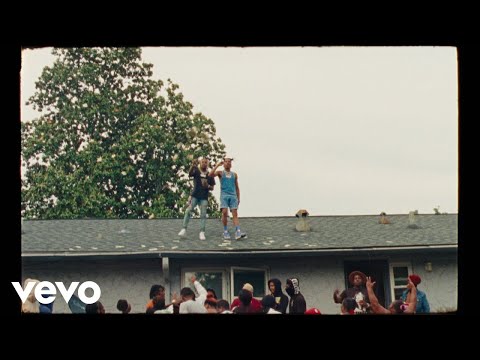
U think lil baby and lil durk hate billionaires? Smh
- Jun 23, 2021·1 replyCGI Cat
walt.. i dunno man.. you’ve been seeming sus lately.. it’s almost like we have an imposter among us.. don’t lie to me walt! you sussy baka
i'm going to kill u
